Sordo Madaleno, in collaboration with építész stúdió and Buro Happold, has been selected to design the 43,000-square-meter New Debrecen Collection Center for the Hungarian Museum of Natural History. Debrecen, Hungary’s second-largest city, is currently the focus of significant urban and university-related development, including plans to relocate the Hungarian Museum of Natural History from Budapest to the edge of Debrecen’s Great Forest. The proposed Collection Center is conceived as a facility dedicated to the controlled storage and study of more than 11 million objects, drawing conceptual inspiration from traditional Hungarian clay vessels, structures historically used to protect and preserve. The project would mark the first European cultural commission for the Mexican architecture practice, which operates studios in London and Mexico City.
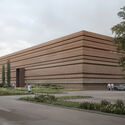
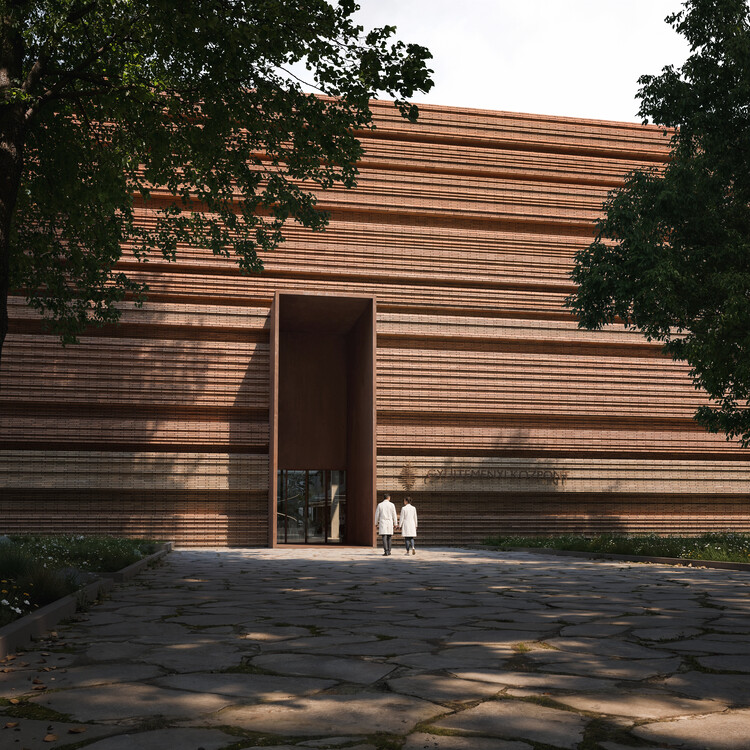
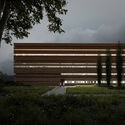
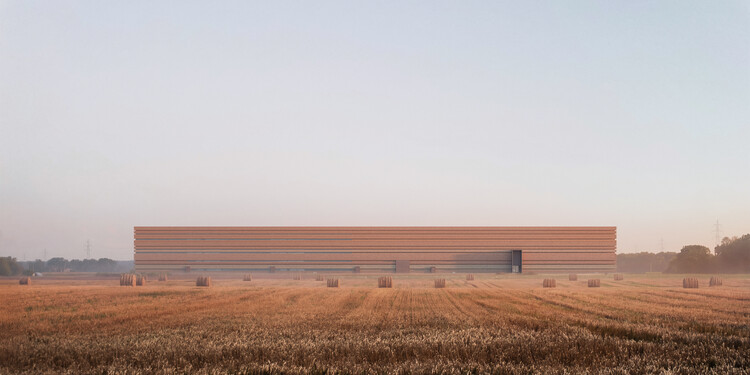
The site is located within the University of Debrecen Science Park, approximately four kilometers from the planned new Natural History Museum building. Informed by research into regional craft traditions and material histories, particularly the longstanding use of clay and earthenware for conservation, the design takes the form of an elongated rectilinear volume measuring 141 by 83 meters. Its stratified brick façade incorporates varying tones that reference Hungary’s geological and material diversity, using soils sourced from different regions of the country for brick production. These variations articulate the building’s monolithic presence, which is intended to relate to the surrounding low-lying landscape and expansive horizons.
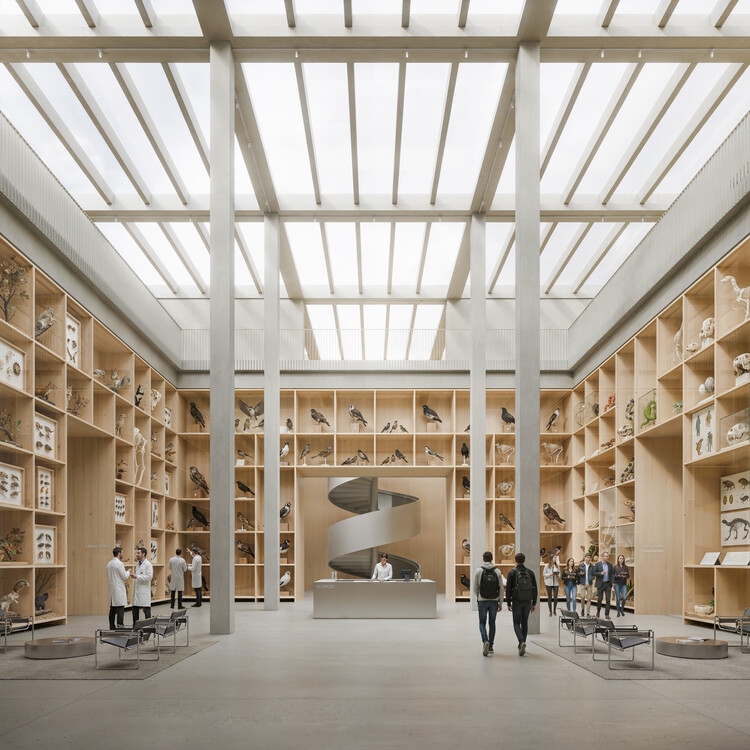
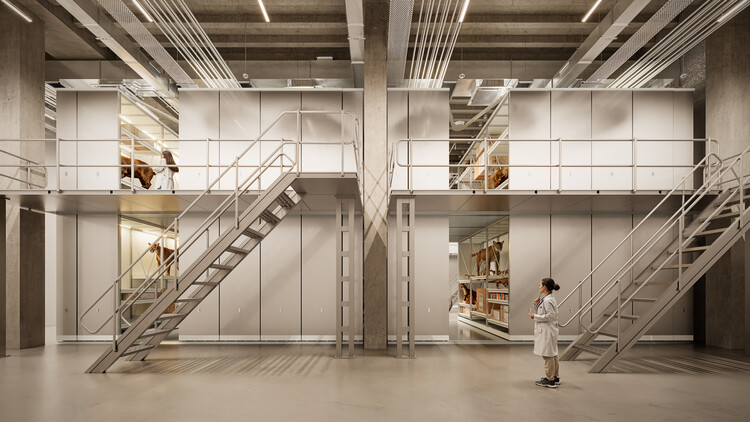
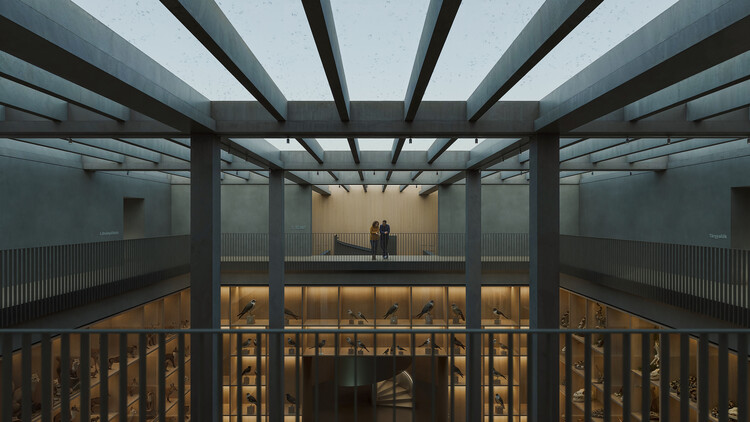
The proposal is organized to support controlled storage, research activities, and the long-term preservation and production of knowledge. The spatial layout spans three above-ground floors and a basement, comprising approximately 28,000 square meters of collection storage, 6,000 square meters of study spaces including conservation laboratories, and a triple-height atrium designed to accommodate visiting student groups and research professionals. Within a top-lit atrium, selected items from the museum’s collection are envisioned for display, forming a gallery space adjacent to lecture halls that could also host events. In workspaces used daily by staff, controlled daylight and ventilation are introduced through internal courtyards to enhance environmental comfort.
Selected from a shortlist of twelve teams, the jury highlighted that the proposal by Sordo Madaleno, építész stúdió, and Buro Happold addresses the functional requirements of a scientific support institution through its spatial organization of storage, study areas, and laboratories, while prioritizing long-term collection preservation and research operations. The jury also noted the project’s attention to sustainability, security, and logistics related to collection handling, positioning the Center as a potential hub for scientific research and international collaboration across disciplines, including geology, paleontology, zoology, human activity, and ecology.
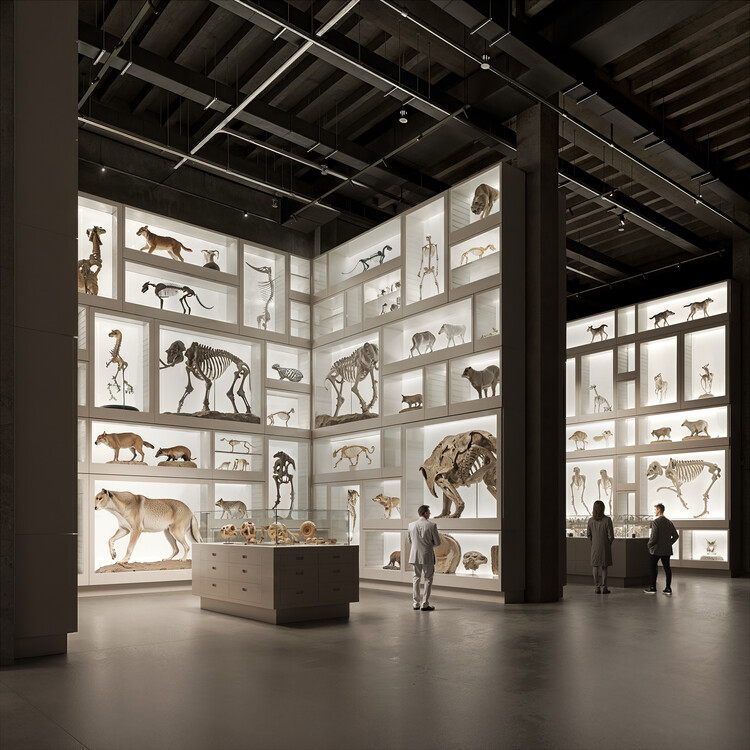
The Center’s staff are stewards of the objects, and the architecture becomes an extension of that stewardship. Within this layered ecology of care, the object is framed not as an isolated artefact but as an embodiment of life-worlds and landscapes that nourish reciprocal relationships. Our building reflects this mutuality, providing a space of unity between conservator, stakeholder, architecture, and environment. — Architect Fernando Sordo Madaleno
다른 최근의 문화 건축 개발로는 Snøhetta의 부산 오페라하우스 공사가 2026년 말 완공을 목표로 진행 중이며, Herzog & de Meuron의 멤피스 미술관이 2026년 12월 개장을 앞두고 진행 중이며, Snøhetta와 Beijing Institute of Architectural Design(BIAD)이 Tongzhou 구역에 Beijing Art Museum 건립에 착수했다. 최근 개관으로는 OMA가 뉴욕에서 확장한 뉴 뮤지엄과 이탈리아 Fiorenzuola d’Arda에 위치한 탄소섬유 과학 박물관이 개관했으며, 이 박물관은 CRA–Carlo Ratti Associati가 고(故) 건축가 Italo Rota와 협력하여 설계했다.