Foster + Partners, in collaboration with Dar Al-Handasah, has revealed the master plan for Al Najd Agricultural City in Dhofar, southern Oman. Covering approximately 54 million square feet, the development is conceived as a self-sustaining agricultural and urban settlement designed to respond to the region’s environmental conditions and agricultural landscape. Commissioned by the Ministry of Housing and Urban Planning and the Ministry of Agriculture, Fisheries, and Water Resources, the project forms part of the objectives outlined in Oman Vision 2040, which seeks to strengthen food security, diversify the national economy, and support sustainable development initiatives.
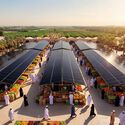
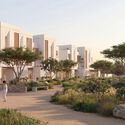
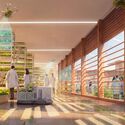
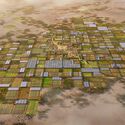
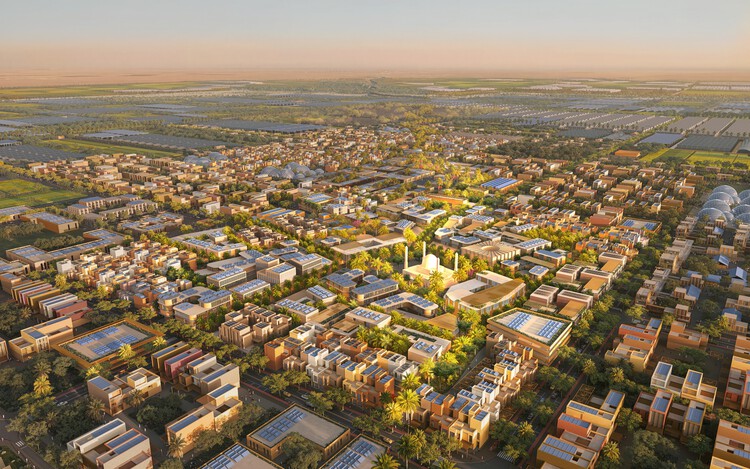
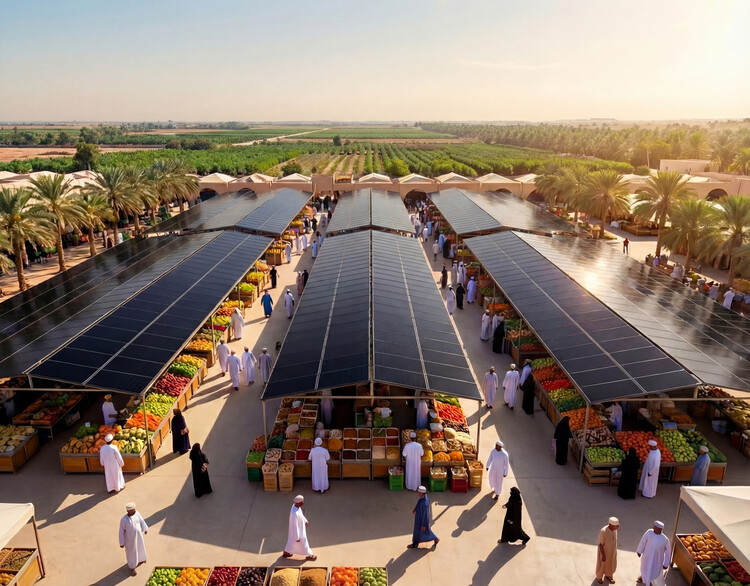
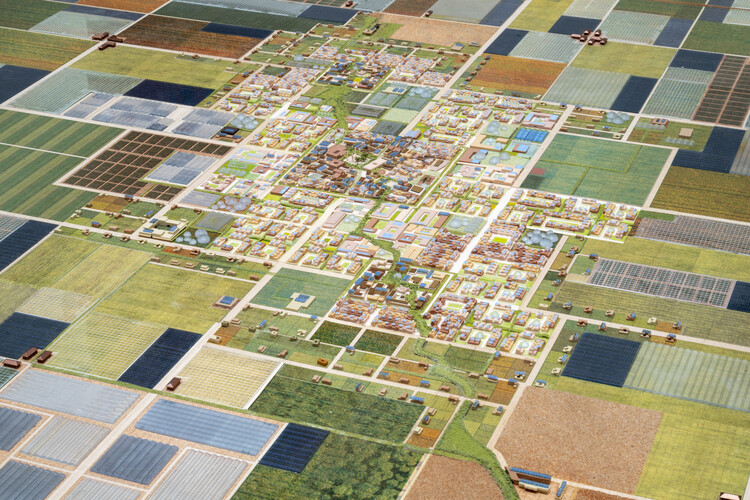
Located on fertile agricultural land in the Al Najd area, the master plan draws on the historical relationship between agriculture and settlement patterns in Oman. The proposal is organized around a compact urban center surrounded by a network of agricultural plots ranging from 10 to 200 hectares in size. These productive landscapes are distributed across the site through a multi-scalar planning strategy, extending beyond farmland into parks, public squares, courtyards, and linear green corridors. The integration of agricultural functions into civic and public spaces establishes a framework in which food production and urban life are closely interconnected.
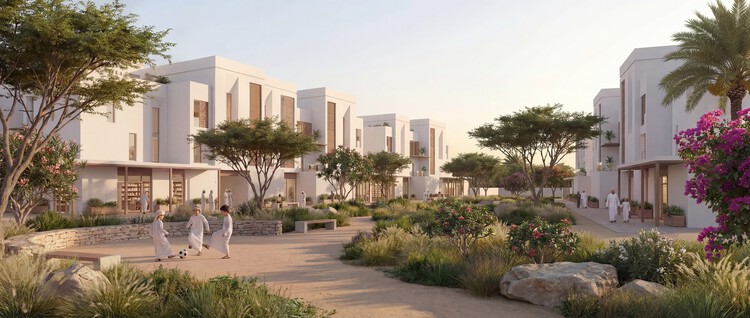
The urban core is designed to accommodate a projected population of approximately 13,000 residents and support the creation of 6,500 jobs. A network of shaded pedestrian routes connects residential areas with educational, healthcare, cultural, religious, and commercial facilities, while public transportation infrastructure is incorporated throughout the development. The master plan also positions the city within a broader regional network of agricultural operations and logistics systems, aiming to strengthen food production and distribution capacities across southern Oman.
Agricultural production is structured around crop varieties selected for their suitability to local climatic conditions and economic potential. Planned cultivation includes date palms, greenhouse-grown vegetables such as tomatoes, and industrial crops used for raw material production. In addition to farming activities, the project incorporates facilities for agro-processing and value-added production, including the processing of dried and frozen foods, oils, compost, and fertilizers. These activities are intended to support local supply chains while expanding opportunities for agricultural exports.
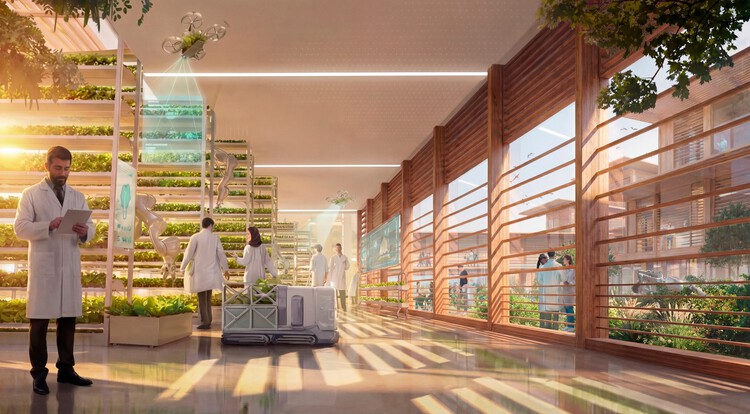
환경 성능은 일체형 기술과 자원 관리 시스템의 연계로 다뤄진다. 차양 네트를 이용해 일사 노출과 온도를 조절하고, 재생에너지 생산과 농업 생산을 결합한 농생태 시스템(agrivoltaic), 순환형 재배 시스템을 위한 양식 수경 재배 기술이 도입된다. 수자원은 지하수 추출, 인근 산맥에서 흘러내리는 우수를 댐 인프라로 모으는 방식, 그리고 해수 담수화로 조달된다. 이러한 시스템은 물 사용을 최적화하고 자원 소비를 줄이기 위한 모니터링 기술과 관개 전략에 의해 뒷받침된다.
최근 Foster + Partners의 다른 소식으로는 뉴욕의 Two World Trade Center(월드 트레이드 센터 부지의 마지막 상업 타워)와 American Express의 향후 본사에 대한 업데이트된 설계가 공개되었고, 암스테르담의 Rijksmuseum 인접 조각 정원 신설 계획이 공개되었다. 이 정원은 암스테르담 학교 양식의 세 가지 역사적 파빌리온의 개보수를 중심으로 한다. 앙골라에서는 교통부와 협력해 이콜로 에 벵고 에어로트로폴리스(Icolo e Bengo Aerotropolis)의 마스터플랜을 수립했고, 신규로 완공된 Dr. Antonio Agostinho Neto 국제공항을 둘러싼 대규모 개발이다.