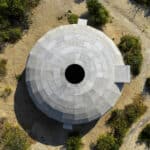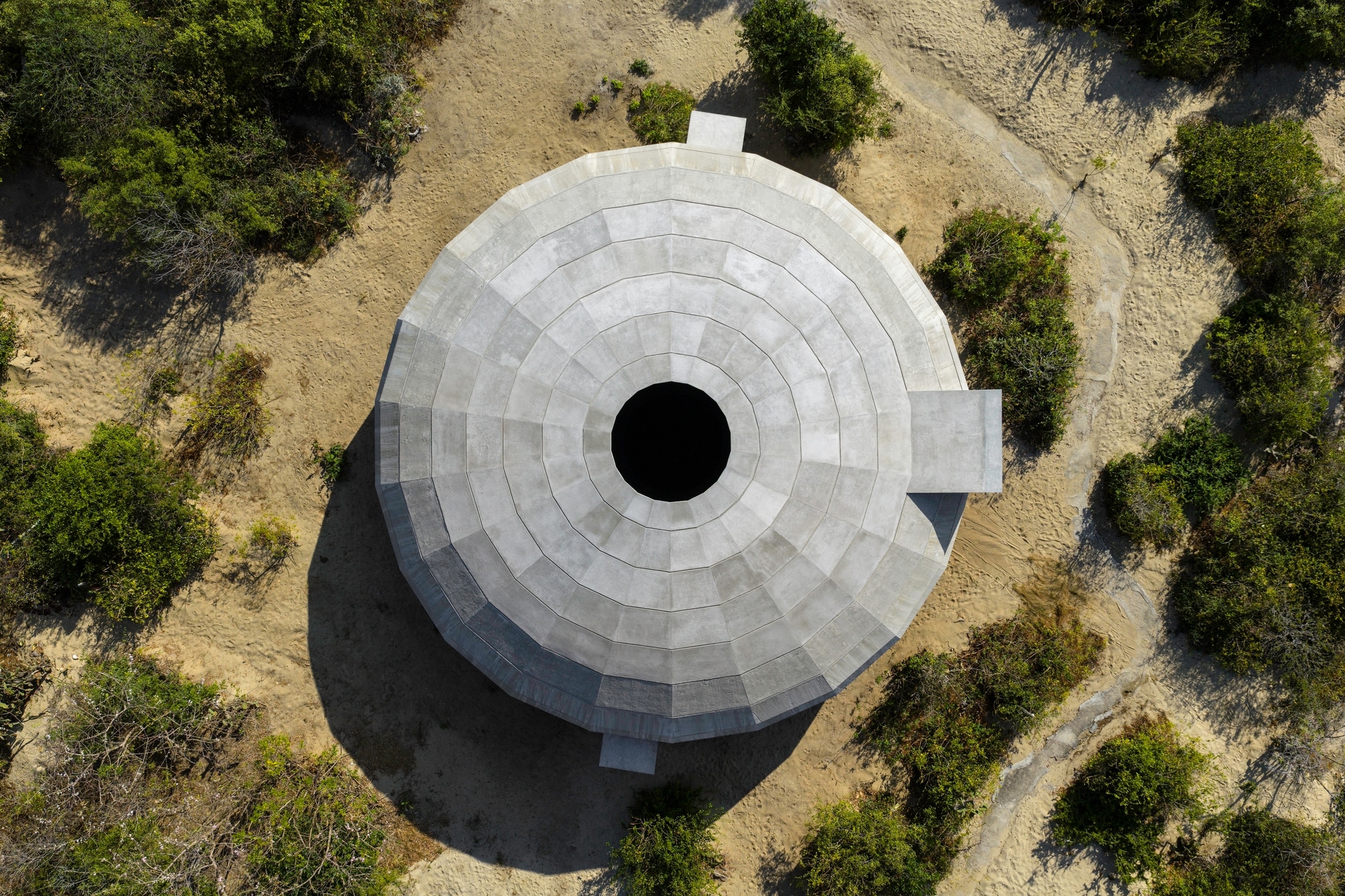
A domed, ellipsoidal pavilion for mushroom production designed by OMA for Fundación Casa Wabi opened on March 4, 2026. The building is located within Casa Wabi’s 25-hectare site in Oaxaca, Mexico, on the Pacific coast, about 30 minutes from the city of Puerto Escondido. Casa Wabi is a foundation created by artist Bosco Sodi that promotes the exchange of ideas between artists of various disciplines and local communities. The foundation’s flagship building was designed by Japanese architect Tadao Ando and completed in 2014. The OMA-designed pavilion adds a new space for cultivating mushrooms and fostering exchange between food, art, nature, and local communities to the foundation’s facilities, which include a multipurpose palapa, six bedrooms, two enclosed studios, six open studios, a screening room and auditorium, a 450-m² exhibition hall, and various workspaces.
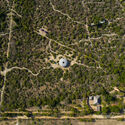
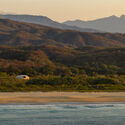
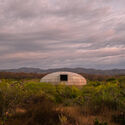
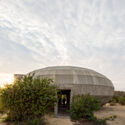
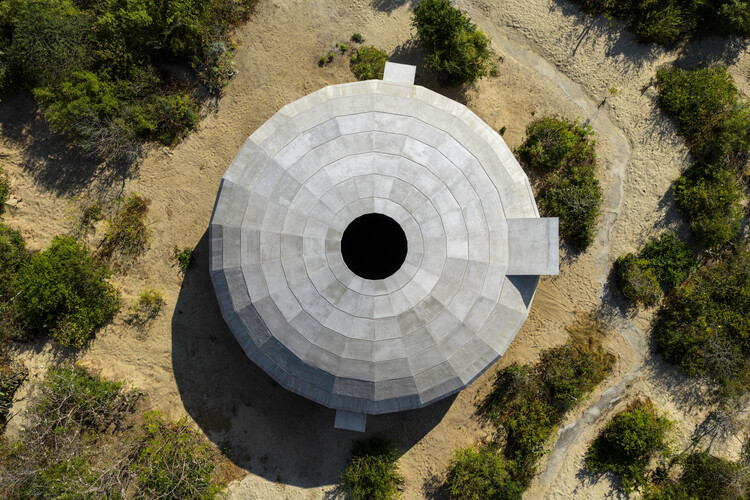
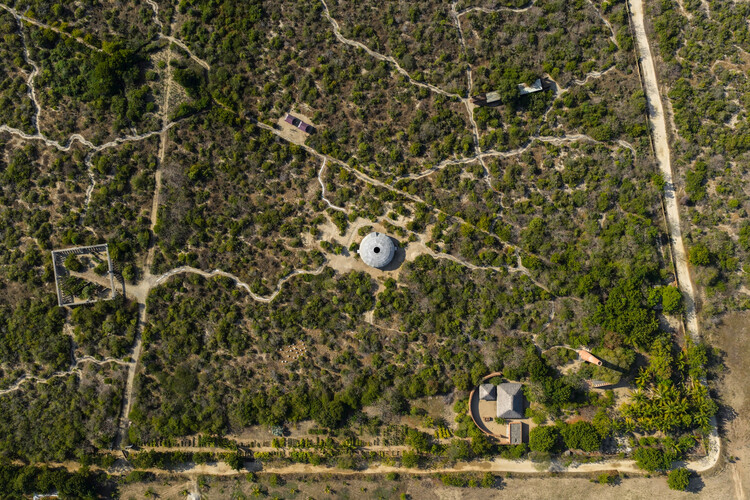
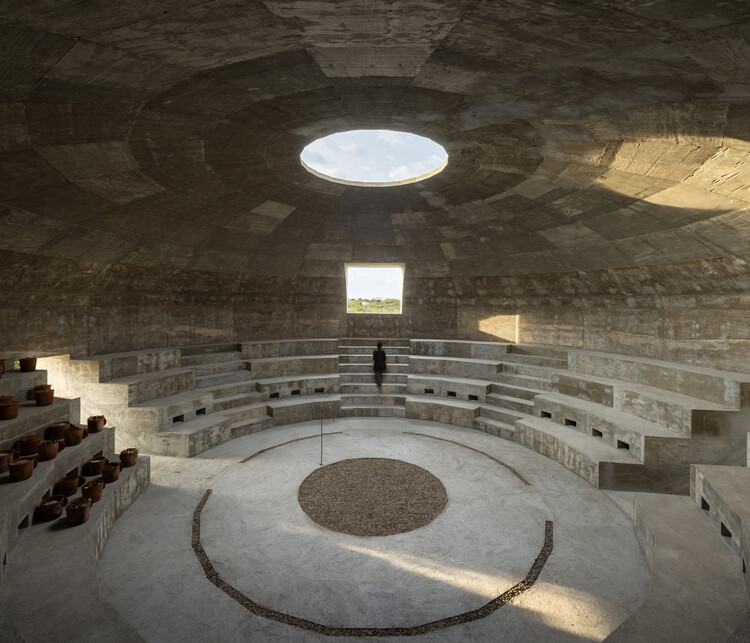
The Mushroom Pavilion was designed by OMA’s New York office, led by Shohei Shigematsu, with project architects Shary Tawil and Caroline Corbett. The building opens to the surrounding 65 acres of natural landscape between the mountains and the Oaxacan coast through an oculus that connects the central space to the sky, as well as through openings around the lower perimeter that allow natural ventilation. A platform and portal at the top of the stepped interior offer views above the surrounding vegetation toward the ocean. The pavilion’s 200-m² volume curves inward at its base to minimize contact with the ground, avoiding interference with the growth of the native guayacán tree species.
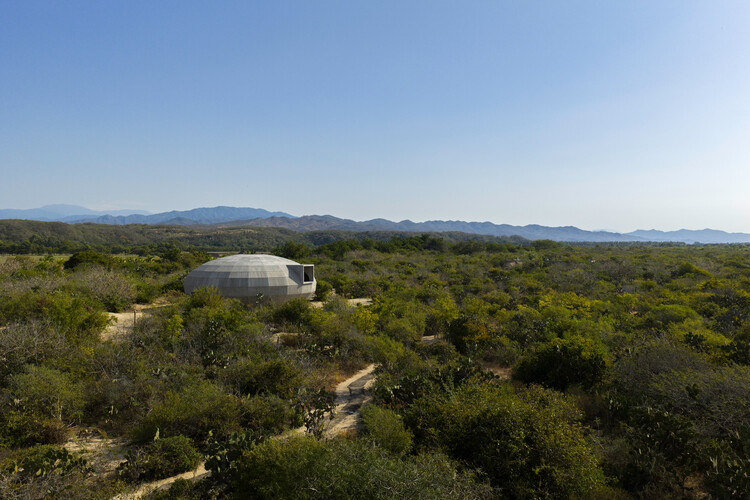
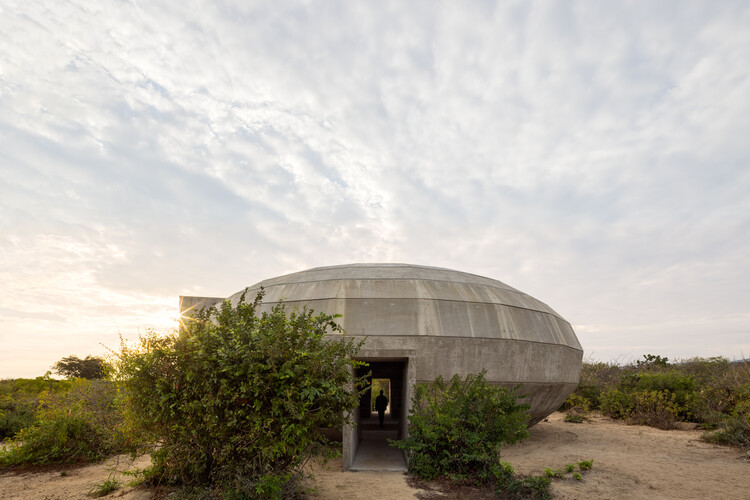
The 200-m² self-supporting structure functions as an incubator for mushroom production on the arts organization’s campus. Its ellipsoidal form was developed to optimize the interior organization required for cultivating mushrooms. Inside, the domed space is divided into three chambers, a fruiting room, an incubation room, and a storage, which encircle a central gathering space. The lower half of the bowl is stepped to form shelves for handmade terracotta mushroom pots crafted by local artisans. The mushroom cultivation process is fully visible thanks to the elliptical form and stepped section, creating a panopticon-like viewing experience.
The pavilion is built of concrete. Its shell is composed of troweled and poured-in-place concrete, with burlap stamped onto the exterior surface to absorb the site’s high iron-content water. As a result, the surface is expected to rust and gradually change appearance over time due to the chemical interaction between its components and the environment. It is expected that this new space will serve not only to cultivate fungi, but also to foster the exchange between food and the local communities of Puerto Escondido by teaching them about the growth process. The production will also be integrated into the kitchen of the Foundation and of Hotel Escondido.
The Mushroom Pavilion at Casa Wabi marks OMA’s first built work in Mexico. Other recent news from the office includes the upcoming opening of the New Museum expansion on March 21st, the only museum in New York City dedicated exclusively to contemporary art. Further developments are expected in 2026 for Albania’s Selman Stërmasi Stadium following the announcement of OMA / David Gianotten as the winner of the competition to renovate the historic building and its surrounding area in April 2025. The office has also recently been involved in the design of two exhibitions: Countryside: A Place to Live, Not to Leave, which explores contemporary life beyond the city and how rural territories adapt to global transformation, and Louis Vuitton: Visionary Journeys, which presents a spatial narrative of the Maison’s 170-year creative legacy through zones dedicated to history, craftsmanship, iconic design codes, and cultural exchange.