크고, 표현력이 강하며, 대담하고 아이코닉하며, 유일무이한.
얼마 전까지만 해도 건축은 선언을 만드는 도구로 기능했습니다. 흔히 ‘스타 arquitect’ 시대와 얽혀, 건물은 문화적 상징이나 도시 브랜드의 수단으로 사용되었고, 점유성이나 조형성보다 주목과 웅장함을 우선시하는 경우가 많았습니다. 그러나 오늘날에는 더 조용한 디자인 태도가 등장하기 시작했고, 이는 건축가와 도시의 거주민들 사이에서 함께 축하되고 있습니다. 구체적으로 건축은 다중 활용 가능성을 탐구하는 공간을 만들려 합니다. 강렬한 선언이 아니라, 삶을 과도하게 애쓰지 않고도 지지하는 조용한 관대함을 통해 작동하는 건물들 말이죠.
이 변화의 이해를 돕는 한 가지 관점은 ‘슬랙’(여유)의 개념입니다. 일상 언어에서 슬랙은 피곤함이나 게으름으로 해석되곤 하지만, 건축에서 이를 고정된 용도 하나를 넘어서는 탄력성과 적응성의 여유로 이해한다면 어떻게 될까요? 건축가가 관대하고 개방적인 공간, 수동적 환경 전략, 엄격한 스크립팅에 저항하는 순환 동선을 포함한 건물을 설계한다면 어떨까요?
다음 프로젝트들은 슬랙으로 설계된 건축을 보여줍니다. 이 공간들은 삶이 내부에서 정확히 어떻게 펼쳐질지 미리 규정하기보다는, 그 삶이 펼쳐질 조건을 만들어 줍니다. 모든 가능성을 대본으로 규정하기보다, 이 일곱 건축물은 한 발 물러섬으로도 충분히 성공할 수 있음을 보여줍니다.
Glorya Kaufman Performing Arts Center
By AUX Architecture, Los Angeles, California
Popular Winner, Hall & Theatre, 11th Architizer A+Awards
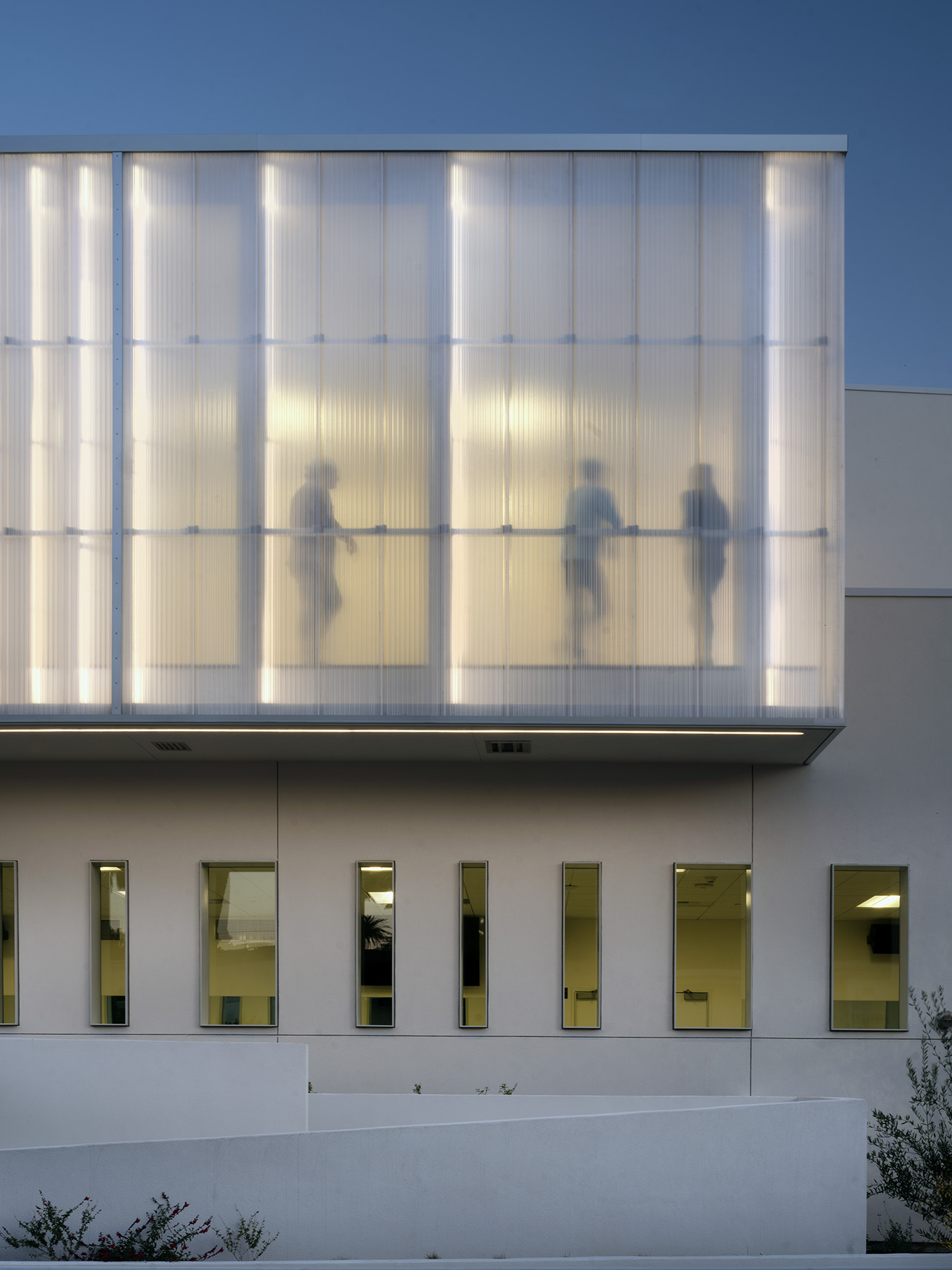 “Programmatic slack” can emerge when buildings are designed to support many activities rather than a single fixed use. The specific project transforms a 1950s temple into a new home for the organization’s therapeutic performing arts program. Activities include dance, music, and theatre in spaces that shift throughout the day.
“프로그램적 여유”는 하나의 고정된 용도 대신 여러 활동을 지지하도록 설계될 때 나타날 수 있습니다. 이 구체적 프로젝트는 1950년대의 사원을 이 조직의 치료적 공연 예술 프로그램을 위한 새로운 보금자리로 바꿉니다. 이 공간들은 하루 중 시간대에 따라 춤, 음악, 연극 등의 활동이 변동합니다.
Designed as a sequence of spatial “vignettes,” these rooms act as classrooms in the morning, rehearsal studios in the afternoon and green stages during performances. In parallel, a semi-translucent polycarbonate façade, made from recycled plastic, wraps and thus preserves the original temple’s structure. The interior is rhythmically framed via identical, consecutive columns, while the lobby alternately compresses and expands to support an array of events.
공간의 일련의 ‘비네트’로 설계된 이 방들은 아침에는 교실로, 오후에는 리허설 스튜디오로, 공연 중에는 녹색 무대로 기능합니다. 동시에 재활용 플라스틱으로 만든 반투명한 폴리카보네이트 파사드가 사원의 원래 구조를 감싸 보존합니다. 내부는 동일하고 연속적인 기둥들로 리드미컬하게 구성되며, 로비는 다양한 이벤트를 지지하기 위해 수축과 확장을 번갈아 수행합니다.
HAWE Factory
By Barkow Leibinger, Kaufbeuren, Germany
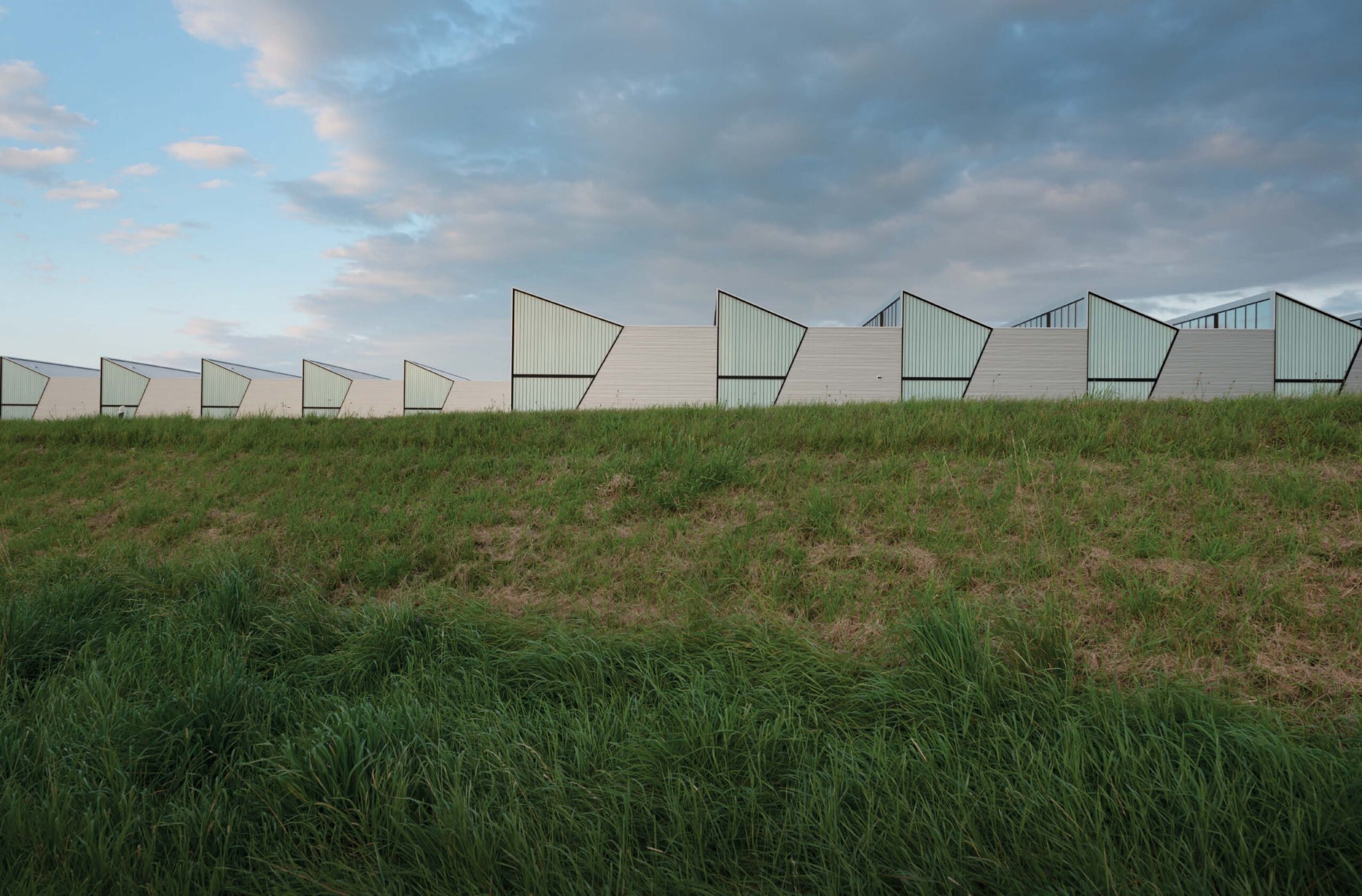
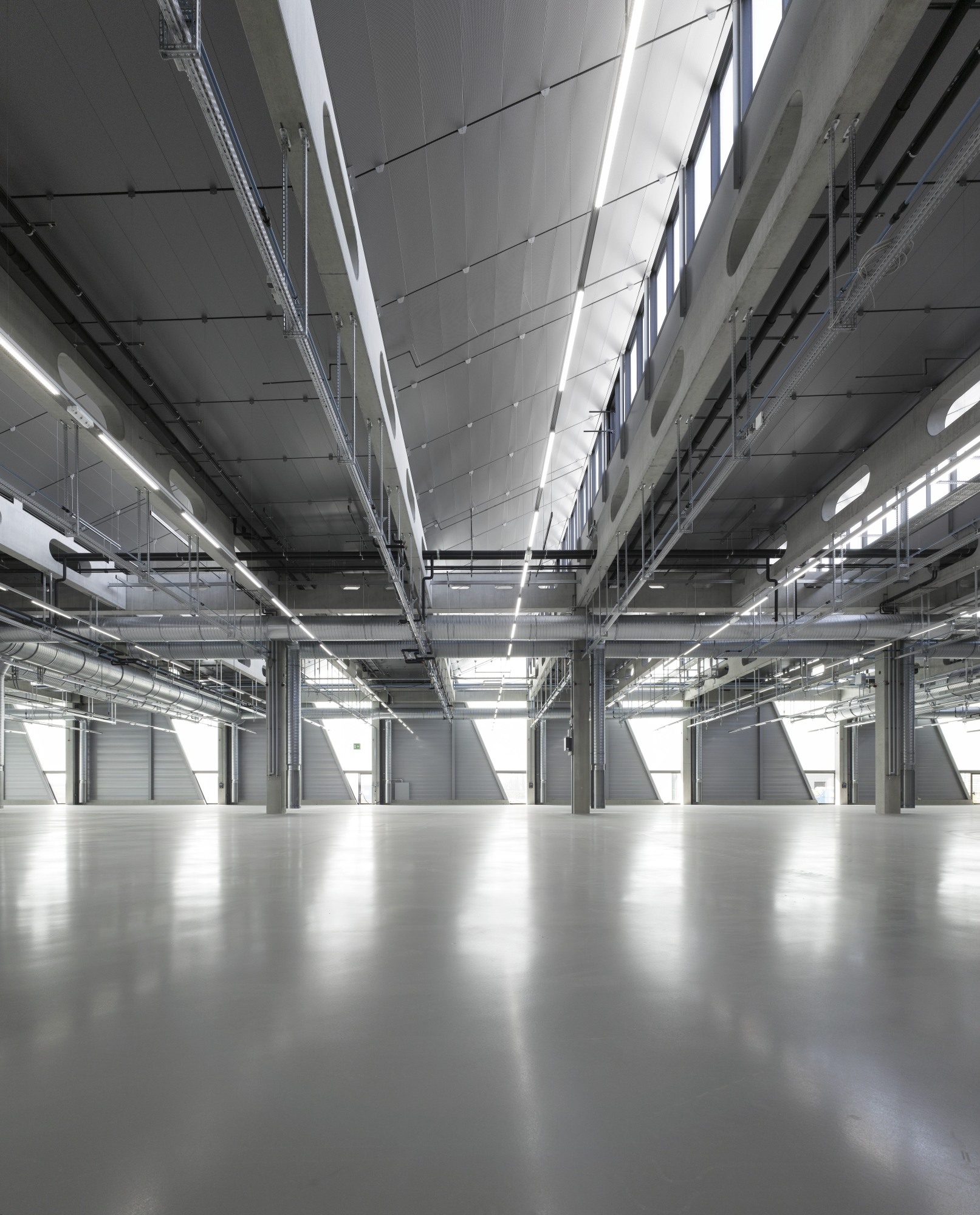 The HAWE Factory reimagines the typical industrial complex as a “green factory” embedded in the agricultural landscape at the edge of the Bavarian Alps. The building includes four production halls in a pinwheel formation around a central courtyard containing offices, meeting rooms and shared facilities.
HAWE Factory는 일반적인 산업 단지를 베이른 알프스의 경계에 자리한 농경 풍경 속으로 녹아든 ‘그린 팩토리’로 재구성합니다. 건물은 중앙 안뜰을 둘러싼 핀휠 형태의 네 개 생산 홀이 포함되며, 이 안뜰에는 사무실, 회의실, 공유 시설이 배치됩니다.
The areas are wide and open, supported by large structural systems that offer adaptability and spatial generosity, while a façade made of metal and glass echoes the rhythms of the nearby Alpine terrain. Finally, photovoltaic panels are installed on the roof, reducing the need for artificial lighting and extensive mechanical systems for the building’s performance.
공간은 넓고 개방적이며, 넓은 구조 시스템이 유연성과 공간적 관대함을 제공한다. 금속과 유리로 이뤄진 파사드는 인접한 알프스 지형의 리듬을 흉내 낸다. 마지막으로 지붕에는 태양광 패널이 설치되어 인공 조명과 대규모 기계 시스템에 대한 의존도를 줄인다.
KIDO Kindergarten
By xystudio, Aleksandrow Lodzki, Poland
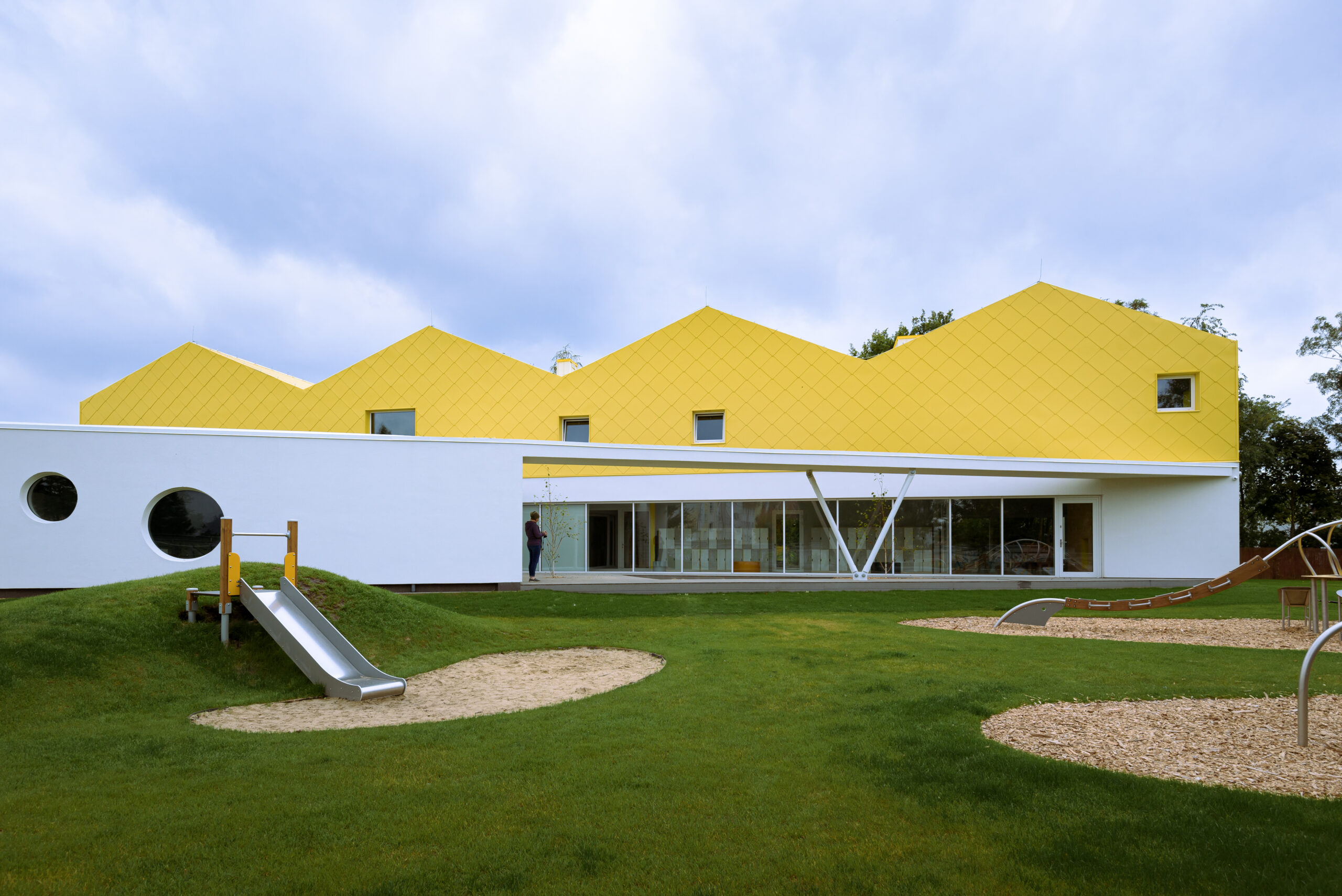
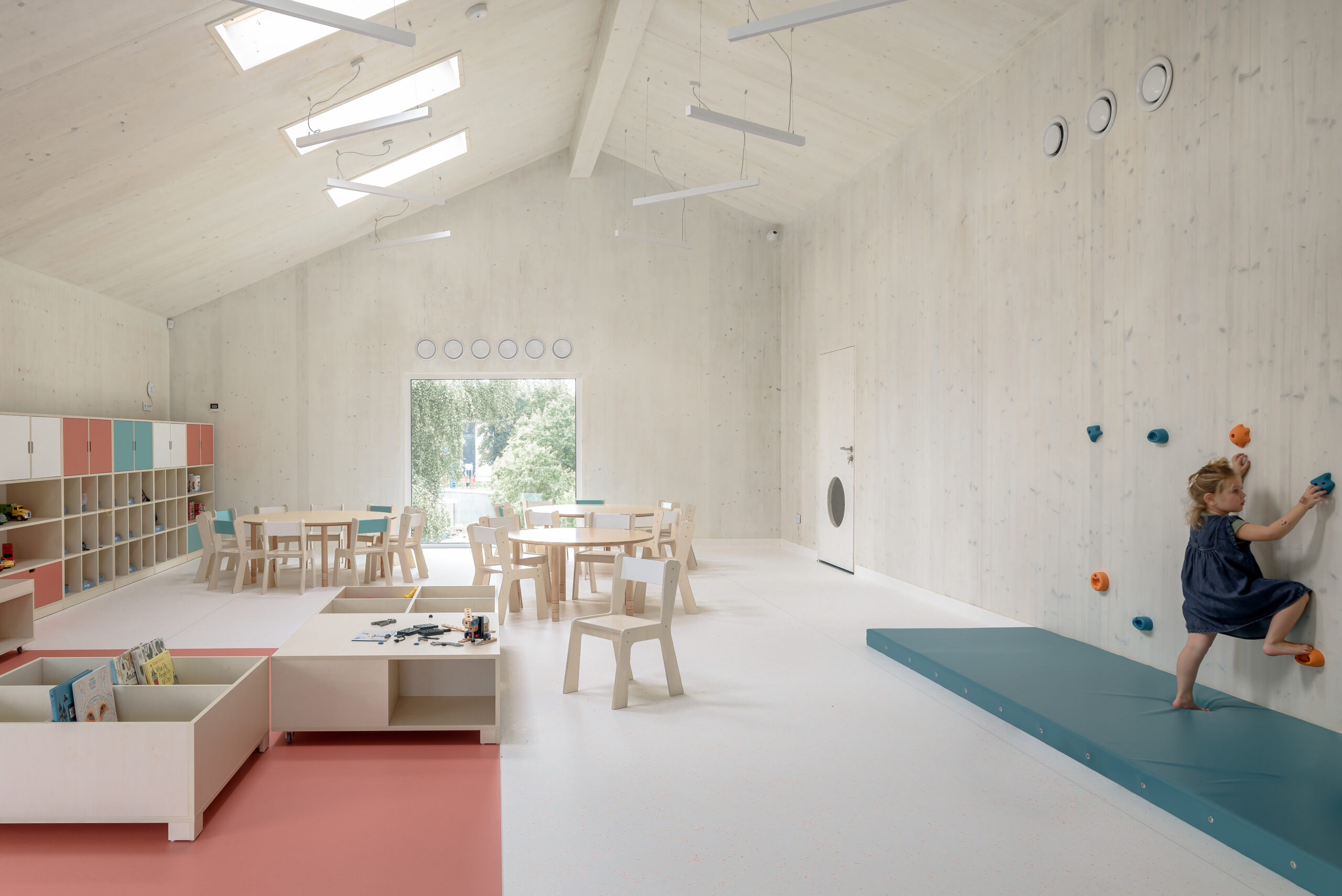 Relying on simple passive strategies and materials, the KIDO Kindergarten – nicknamed the “Yellow Crocodile” – is a public childcare facility in Poland. The project is “slacking” environmentally.
단순한 수동 전략과 재료에 의존하는 KIDO Kindergarten — 노란 악어로 불리는 — 은 폴란드의 공공 보육 시설이다. 이 프로젝트는 환경적으로 ‘슬랙’을 구현한다.
Natural ventilation, chimney draft support and underfloor heating minimize the need for complex technical systems, while exposed timber cladding successfully insulates the space. The layout follows an open-plan organization, where classrooms are positioned around a central hall that acts as a multi-purpose area for play and interaction.
자연 환기, 굴뚝 기류 보조, 바닥 난방은 복잡한 기술 시스템의 필요성을 최소화하고, 노출된 목재 외장재는 공간을 효과적으로 단열한다. 개방형 배치로 교실이 중앙 홀 주변에 배치되어 놀이와 상호 작용을 위한 다목적 공간으로 작동한다.
New Generation Research Center in Caen
By BRUTHER, Caen, France
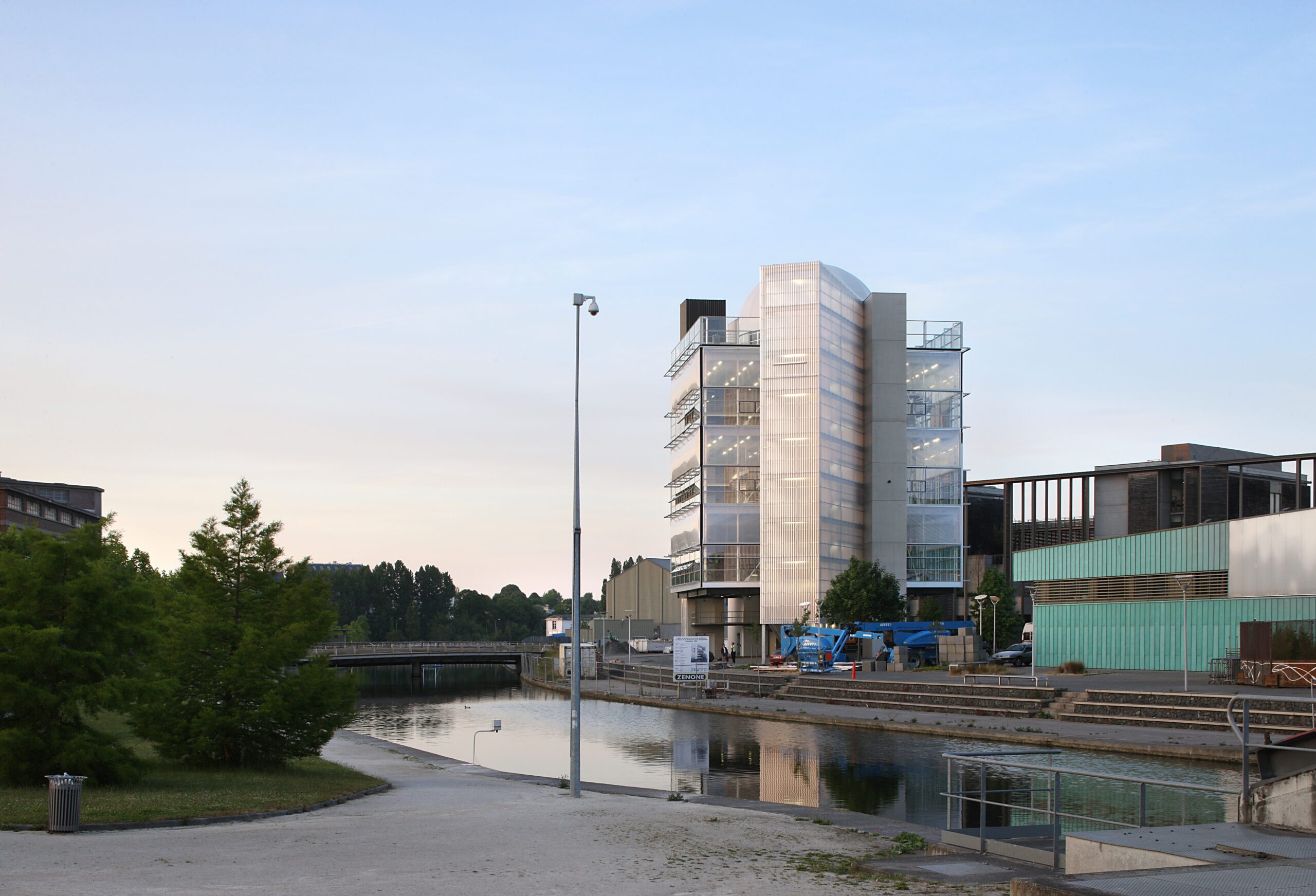
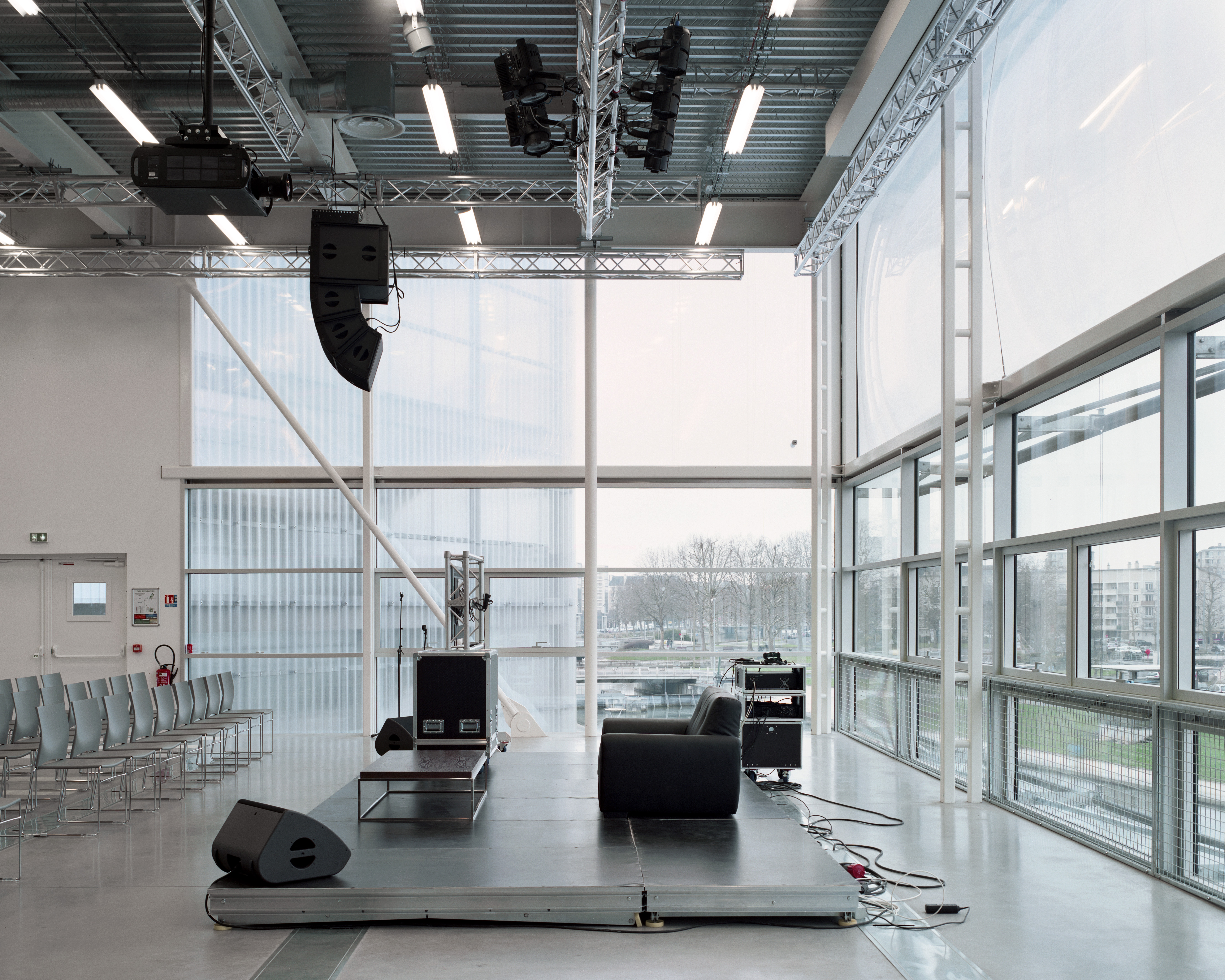 The project is conceived as a spatially open framework. Instead of creating fixed containers for specific activities, the research center extends outwards to the public, encouraging idea exchange and experimentation across disciplines.
이 프로젝트는 공간적으로 열린 프레임워크로 구상되었습니다. 특정 활동을 위한 고정된 용기들을 만들기보다 연구 센터를 대중으로 확장하여 아이디어 교환과 학제 간 실험을 촉진합니다.
The compact structure is located within the urban redevelopment of the Caen peninsula along the canal, organized around large, flexible “megafloors”. A prefabricated structural grid allows each floor to become reconfigured, shifting spaces and activities, while the core service areas are strictly separated.
이 소형 구조물은 운하를 따라 위치한 Caen 반도 도시 재개발 지역에 있으며, 대형의 융통성 있는 “메가플로어”를 중심으로 구성됩니다. 사전 제작된 구조 격자는 각 층을 재구성 가능하게 만들어 공간과 활동을 바꿀 수 있게 하고, 핵심 서비스 구역은 엄격히 분리됩니다.
Webb Chapel Park Pavilion
By Studio Joseph, Dallas, Texas
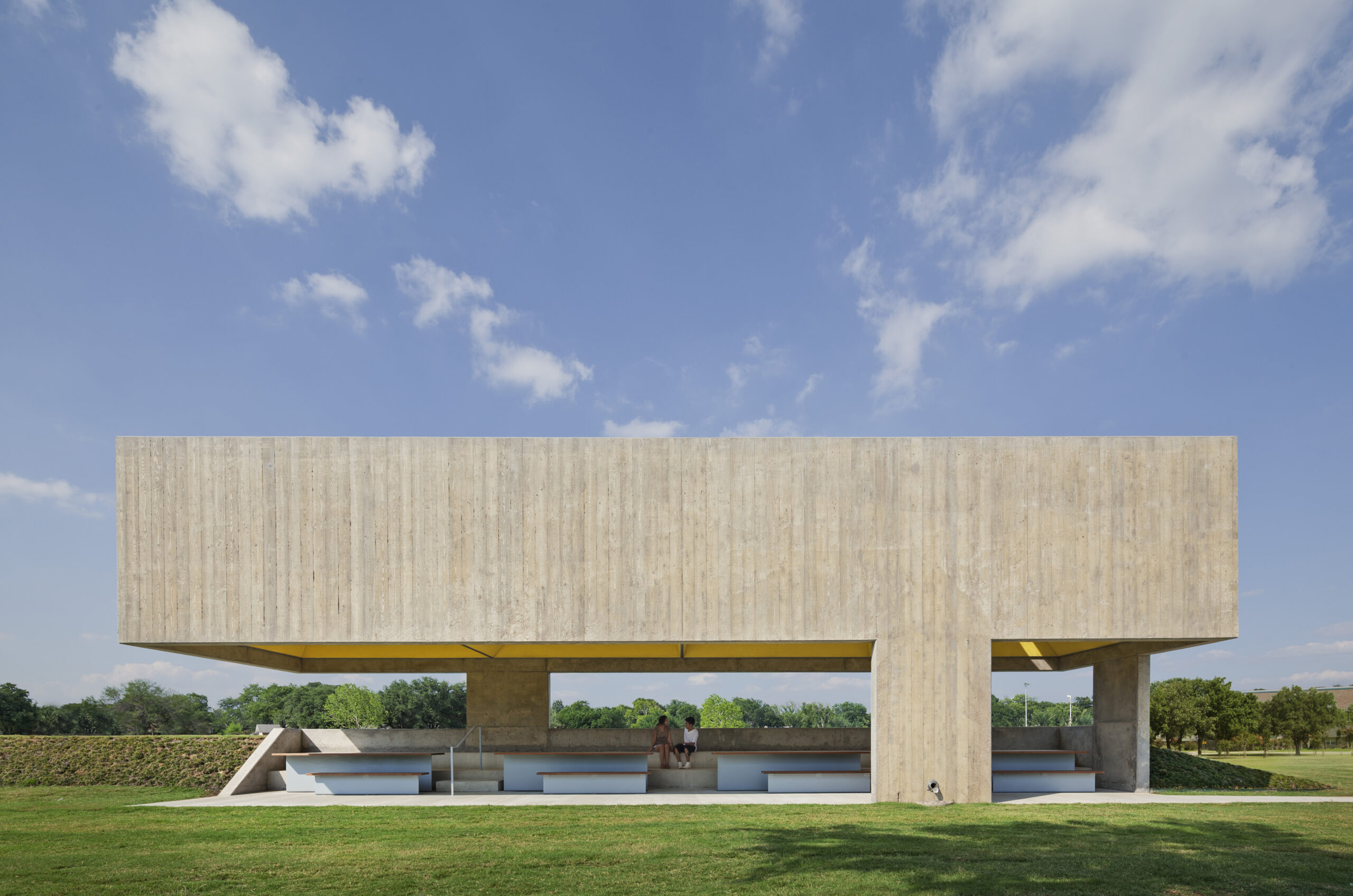
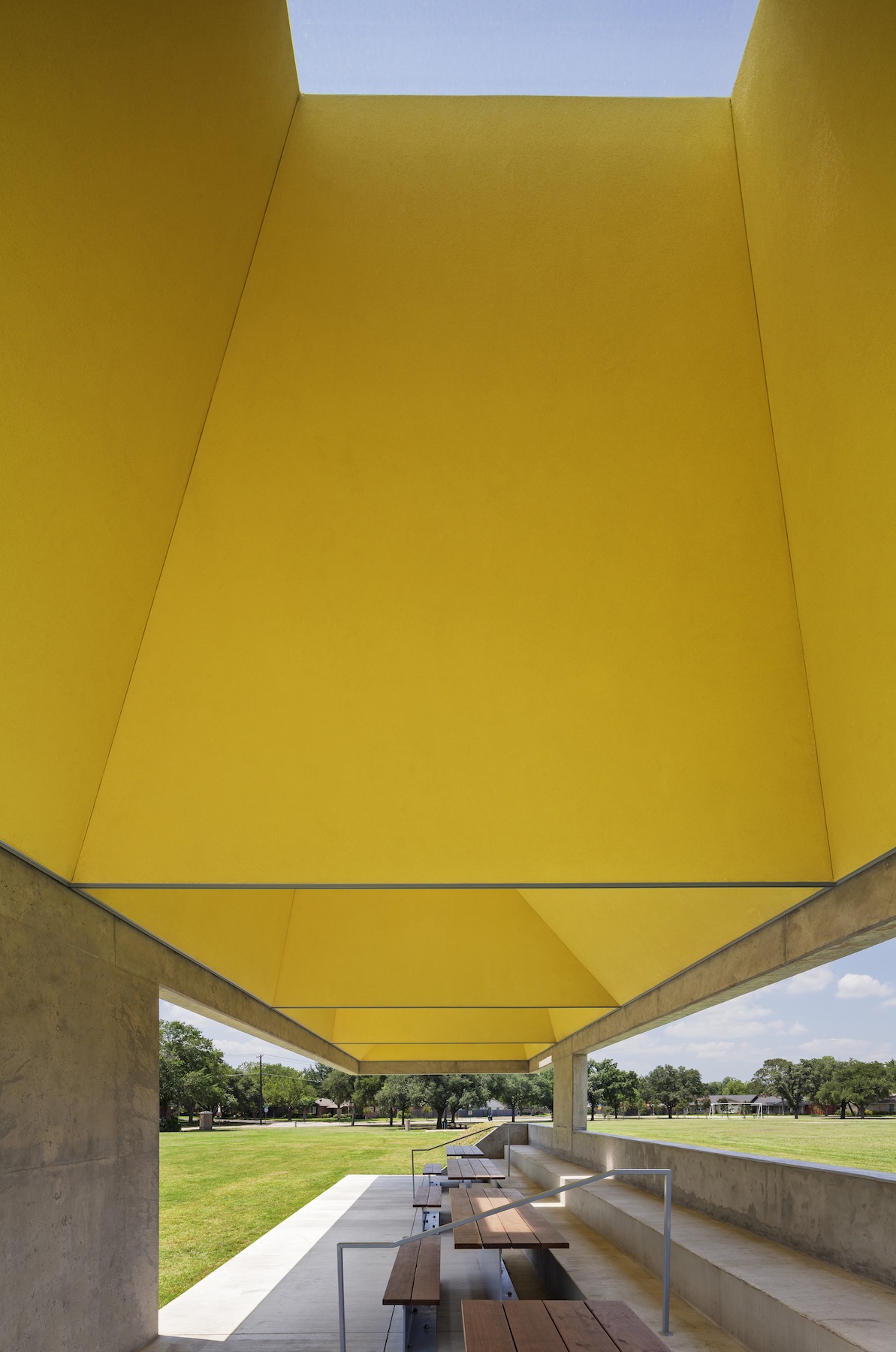 This pavilion project is a small civic structure that relies on discreet spatial strategies to create environmental comfort. Defined by a deep concrete canopy that cantilevers from just three supports, the structure creates an open shaded space that benefits from a passive ventilation system inspired by traditional palapa structures. Programmatically, it replaces a series of aging part shelters, acting as an intermediary space between a playground and a soccer field.
이 파빌리온 프로젝트는 환경적 편안함을 만들기 위해 조용한 공간 전략에 의존하는 작은 시민 구조물입니다. 세 개의 지지대에서 캔틸레버로 뻗은 깊은 콘크리트 차양이 특징이며, 전통 팔라파 구조에서 영감을 받은 수동 환기 시스템의 혜택을 누리는 그늘진 개방 공간을 만듭니다. 프로그램적으로는 노후한 여러 대피소를 대체하고, 놀이터와 축구장 사이의 중간 공간으로 작용합니다.
Magnolia Mound Visitors Center
By Trahan Architects, Baton Rouge, Los Angeles
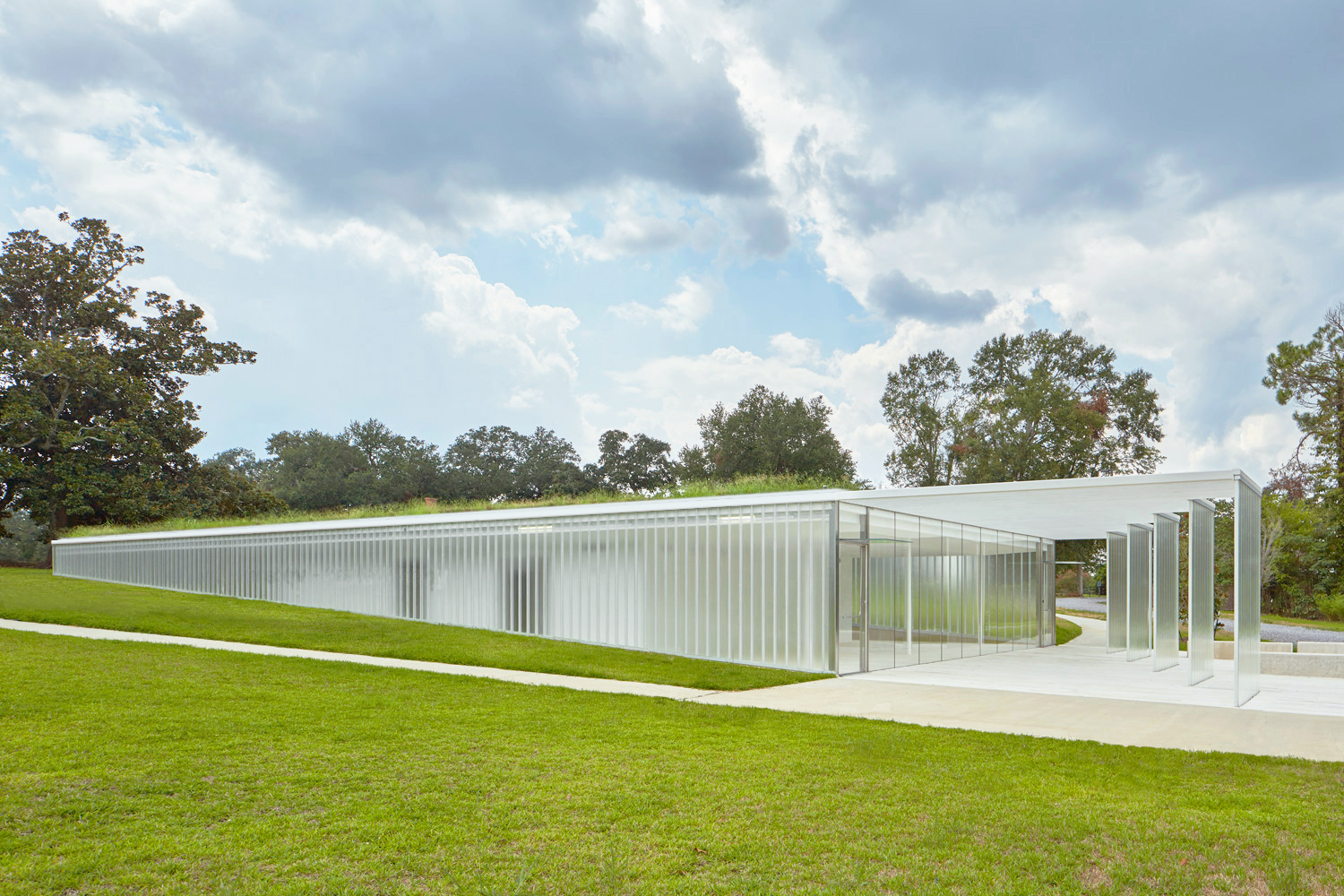
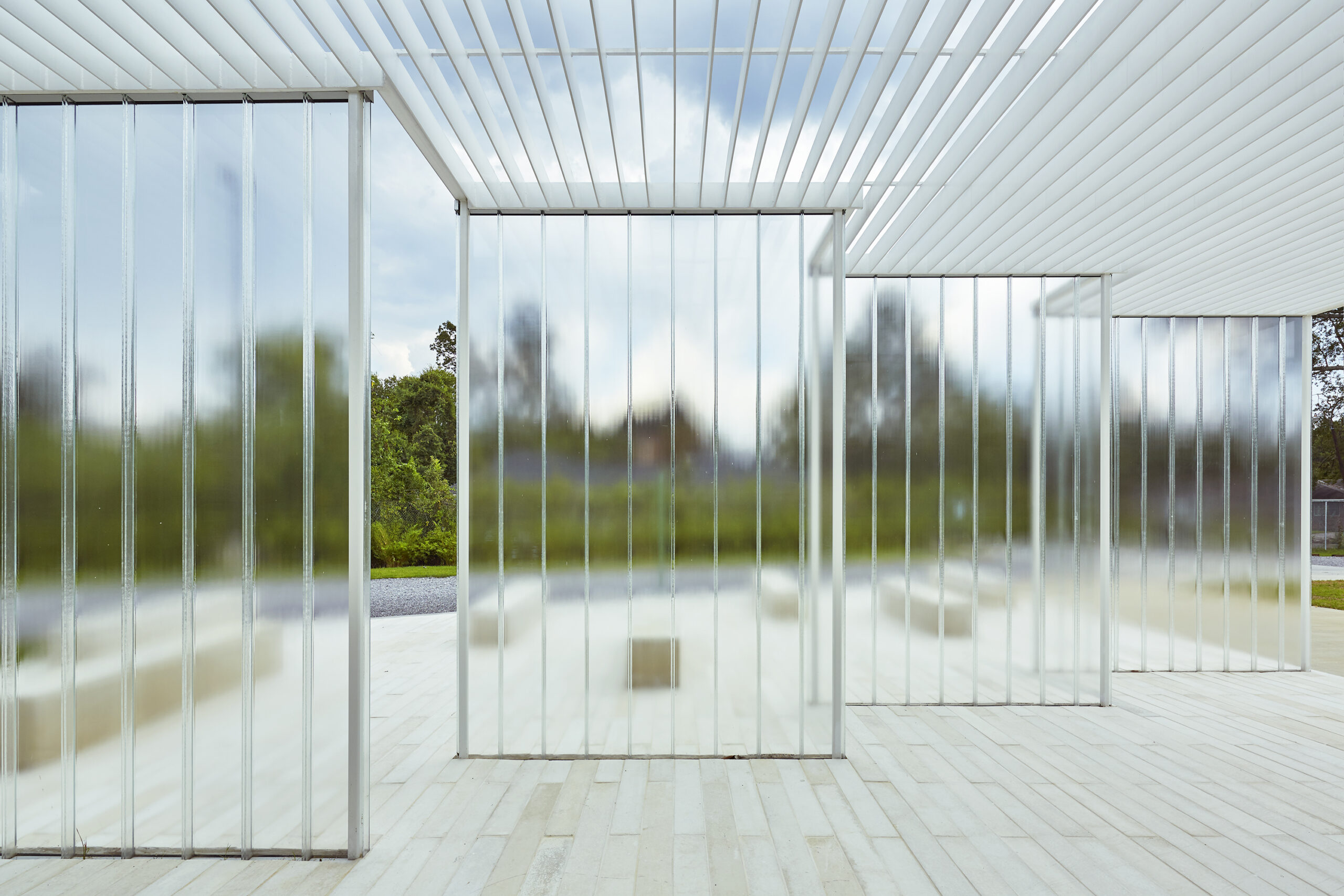 The visitor center deliberately recedes into its surroundings, introducing a minimal contemporary intervention within the historic grounds of the late-18th-century plantation. Instead of antagonizing the existing historic buildings, the project becomes a threshold that transitions the visitors to the cultural site.
방문객 센터는 주변 환경 속으로 의도적으로 물러나며, 18세기 말 플랜테이션의 역사적 부지에 미니멀한 현대적 개입을 도입합니다. 기존의 역사적 건물들과 대립하기보다는, 방문객들이 문화 공간으로 들이닥치는 관문 역할을 하도록 설계되었습니다.
Following the topography of the mound, the roof structure eventually aligns with the landscape, forming a datum that subtly links the new building to the existing architecture. Movement and orientation are gently framed, allowing the landscape and cultural heritage to take center stage.
언덕의 지형을 따라 지붕 구조가 결국 풍경과 정렬되며, 새로운 건물이 기존 건축물과 미묘하게 연결되는 기준점을 형성합니다. 동선과 방향은 부드럽게 구성되어, 풍경과 문화 유산이 주도권을 갖도록 합니다.
Featured Image: HAWE Factory by Barkow Leibinger, Kaufbeuren, Germany