순환에 순수한 기능을 넘어서는 미적 역할을 부여하는 것은 낯선 영역이 아니지만, 일부 프로젝트는 그 아이디어를 더 한층 밀고 나가기로 한다.
이런 경우 경사로와 계단은 “진짜” 건축으로 향하는 길목을 재촉해 지나치는 대상이 아니라, 규모, 움직임, 의도가 드러나기 시작하는 공간으로 여겨진다.
그리고 때로는 그 경로가 더 나아가 건물 자체의 전체 형태와 설계 개념을 형성하기도 한다. 아래의 프로젝트들은 이러한 여섯 차례의 사례를 대표적으로 보여주며, 상승과 하강이 건축을 단지 보완하는 역할을 넘어 적극적으로 정의한다.
생명의 계단: Khadar 빌라
NAM Office, 샨디즈, 이란
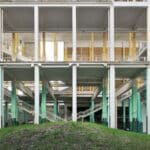
 Stairs for Life는 익숙한 중정형 주거를 움직임으로 형성된 조각 풍경으로 재구성한다. 현장의 한 구석으로 압축된 흰 질량은 상승과 하강의 연쇄를 통해 스스로를 열려 두며, 건물을 가로지르는 길을 걷는 느낌이라기보다는 언덕을 걷는 느낌에 더 가까워 보인다. 계단은 이 프로젝트의 주요 건축 장치로, 외부 계단이 부피를 조각된 경로처럼 감싸고, 내부에 매달려 있는 계단이 중앙의 공극을 따라 흔적을 남긴다. 특정 지점의 계단참에서 두 계단은 유리로 맞닿아 시각적 연속성을 유지하되, 내부와 외부를 하나로 합치는 것은 아니다.
요후 박물관
에이더스(Aedas), 항저우, 중국


물 위에 떠 있는 이 박물관은 땅에서 가볍게 들어 올려진 맞물린 두 개의 옥색 고리처럼 읽히며, Liangzhu 문화의 의례적 물건들을 떠올리게 한다. 원형의 형태는 직접적인 경로가 아니라 느린 고리로 움직임을 구성하고, 경사로와 부드러운 계단 시퀀스가 호수 가장자리의 길에서 위로 올라가 전시관과 안마당으로 방문자를 안내한다. 이 점진적 상승은 접근과 성찰의 개념을 강화하며, 일상적 순환보다 의례적 행렬을 연상시킨다. 투명한 에메랄드 톤의 유리가 강철 구조를 감싸 빛을 부드럽고 고르게 들여보내면서도 공원과 운하 풍경과의 시각적 접촉을 유지한다. 순환은 공간적 서사가 되어 움직임, 빛, 곡선이 역사와 예술, 장소 간의 만남을 구성한다.
루지아탄 습지 공원 상업 서비스 센터
무다-아키텍츠(MUDA-Architects), 칭저우구, 청두, 중국
제 13회 A+Awards, 문화 및 엑스포 센터 부문 심사위원상


진마강의 흐트러지는 질감에 따라 건물은 육지에 억지로 끌어올려진 것이 아니라 물에 의해 그려진 부드러운 곡선의 연쇄로 펼쳐진다. 흰색 금속 지붕은 유리 가장자리 위에 가볍게 떠 있어 습지가 흐르는 길에서 건물의 존재감을 거의 무중력으로 만든다. 순환은 위로 향하는 움직임으로 정의되며, 이중 나선형의 전망탑이 프로젝트의 중심점이 되어 상승을 느리고 연속적인 시선의 행위로 바꾼다. 방문객이 올라갈수록 갈대와 물, 하늘이 시야를 넓히고 아래 풍경에 대한 밀도 높은 인식을 강화한다. 사전 제작된 강철 구조가 이 흐르는 기하학을 지지하고, 투명한 표면은 주변과의 조용한 대화를 유지하여 건축물과 습지가 시각적으로 서로 얽히도록 한다.
Beacon House
EVEREST GROUP, 필라델피아, 펜실베이니아
Jury Winner, 13th Annual A+Awards, 미완성 다가구 주택(S < 10층) — 심사위원상
Popular Choice Winner, 13th Annual A+Awards, 미완성 다가구 주택(S < 10층))

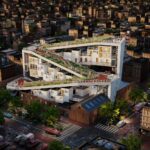
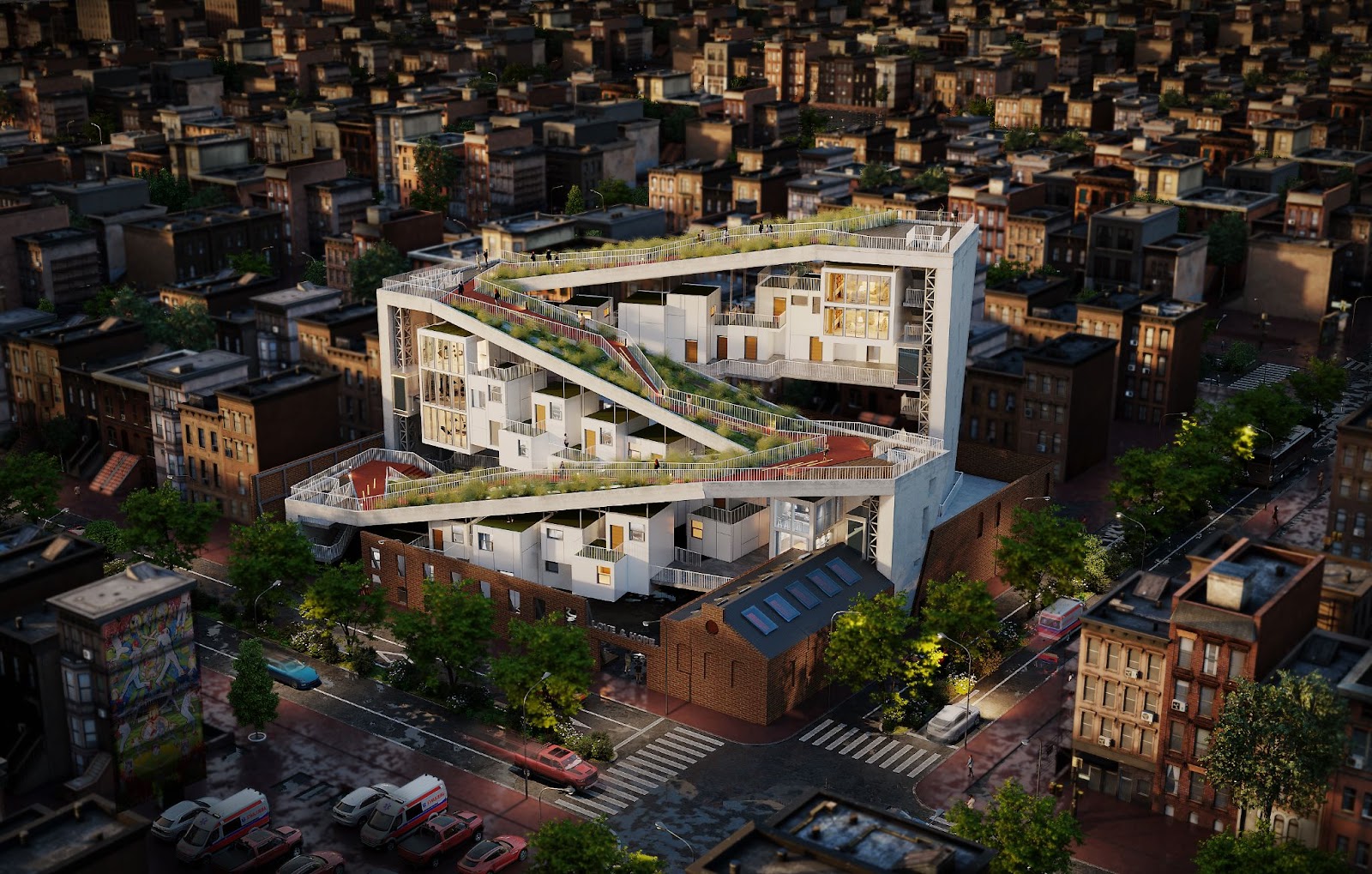
 Conceived as transitional housing, the building uses form to express recovery as a gradual, visible process. Its mass twists toward the Philadelphia skyline, framing a view often denied to those living on the streets and turning the city itself into a source of motivation. A continuous ramp rises from ground level to the roof, operating as both circulation and a public promenade. This sloped path invites slow movement, moments of pause and shared encounters, echoing the effort required to rebuild stability. As residents ascend, the city opens up around them, reinforcing a sense of progress through space. The architecture prioritizes openness and access, using the ramp as a civic gesture that links shelter, public life and aspiration into a single spatial journey.
New Hungarian Natural History Museum
Mecanoo, Debrecen, 헝가리

 The New Hungarian Natural History Museum is conceived as an extension of the Great Forest, shaped by slow movement across terrain rather than abrupt thresholds. Its terraced form steps gently through the site, allowing ramps and broad stairways to guide visitors along a continuous spatial promenade that alternates between exhibition spaces and open landscape. These sloping paths recall natural topographies, encouraging exploration through gradual ascent rather than formal circulation. Green terraces and roof gardens operate as walkable surfaces, where learning unfolds alongside views toward the zoo and forest canopy. Transparent façades and a lightweight canopy filter light and frame the surroundings, reinforcing the sense that circulation here is less about getting from one level to another, and more about understanding nature through movement and proximity.
Ramp Around House
K59 Atelier, Vũng Tàu, Vietnam

 Set into a steep coastal site, the house is shaped around a continuous ramp that replaces stairs as the primary way of moving through daily life. The ramp traces the natural slope of the terrain, beginning in the front yard, looping around a planted courtyard and rising gradually toward a balcony overlooking the sea. Its gentle incline supports wheelchair access while encouraging slow, attentive movement rather than physical strain. The ramp also mediates climate: it directs rainwater outward, captures breezes and filters sunlight through concrete sunshades and vertical louvers. Washed stone surfaces protect against sea air and soften heat and sound. Circulation becomes a lived experience, linking care, climate and landscape through a single, measured path.