Ask any AI platform to write an architectural concept statement, and the result will feel strangely familiar. Vague phrases such as “the building establishes a dialogue with the landscape”, “the façade acts as a porous urban threshold,” or “the structure serves as a catalyst for community interaction” appear in most architecture texts — from competition entries and awards submissions to press releases and project descriptions. Yet, after reading them, it is often impossible to answer a simple question: what does the building actually do? And, for that matter, what role did the architect play in making design decisions?
Paradoxically, artificial intelligence exposes this problem rather than causing it, simply reproducing the empty language it has learned from architects themselves.
How did architectural writing become so abstract? Competition culture encourages impressive, often ostentatious language, while academic influence introduces theoretical vocabulary that is not always accompanied by the rigor or references that originally gave it substance, and — from a market point of view — PR agencies frame projects through flamboyant storytelling instead of providing more practical narratives. To some extent, AI mirrors this writing practice, but it also reveals a very interesting dynamic: in order to generate a text that is freed from clichés, architects must provide a clear prompt, a clear idea and a clear objective.
- The Brief – What problem needs solving?
- The Constraint – What made the project difficult?
- The Design Move – How does the architecture respond?
- The Result – What the building actually does.
위산 충정 아카데미 북스토어, 라이브라리 앙바르드
By Trace Architecture Office, Dali, China
Jury Winner, Commercial Renovations and Additions, 13th Architizer A+Awards
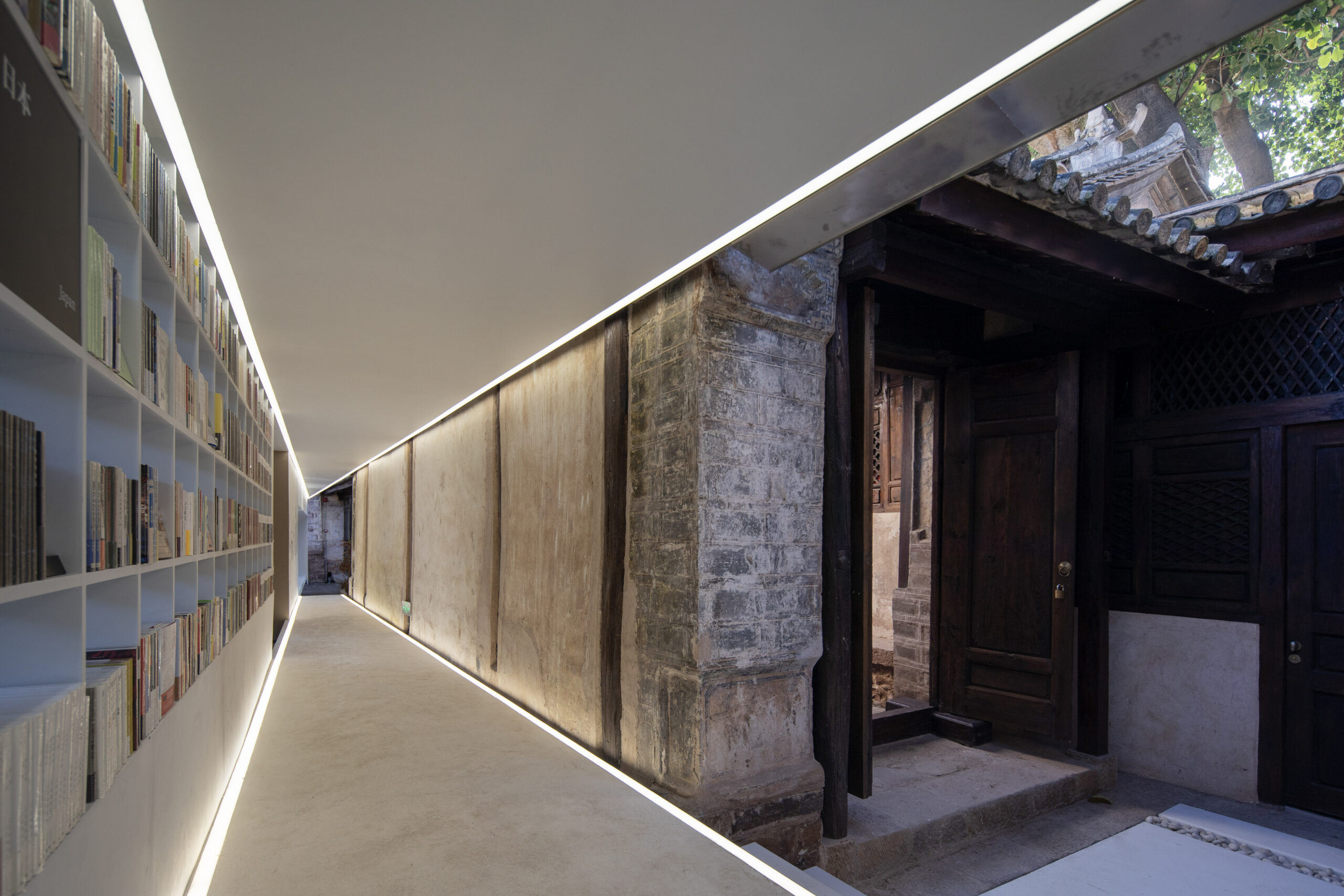 The Brief: Le projet visait à réparer et rénover l’historique Chongzheng Academy, dans le vieux village de Weishan, pour le transformer en une librairie multifonctionnelle incluant des espaces d’expositions, un théâtre et un café. En outre, cette intervention entend revitaliser les environs et réactiver la vie culturelle de la ville.
The Constraint: Le site comprend une académie de 500 ans, un banyan arbre de 330 ans et une ancienne usine de fer des années 1960 avec une structure en bois préservée. Par conséquent, tout geste de conception devait préserver et protéger ces éléments historiques tout en introduisant de nouvelles connexions spatiales entre la ville nouvelle et l’ancienne.
The Design Move: Le projet conserve les murs historiques, les structures en bois et la végétation environnante tout en insérant deux Galeries de Livres légères qui reconnectent les cours de l’académie et créent des espaces de lecture et d’événements culturels. La stratégie d’intervention est chirurgicale et stratégique, travaillant en étroite collaboration avec le contexte existant.
The Result: L’académie est réactivée en une destination culturelle publique qui soutient la communauté et exploite l’histoire et les « artefacts » trouvés sur le site. L’architecture devient un agent de préservation, d’insertion et de connexion, créant un espace civique multifacette.
Fog Bridge
By Art+Zen Architects, Rongcheng City, China
Popular Winner, Unbuilt Transportation, 12th Architizer A+Awards
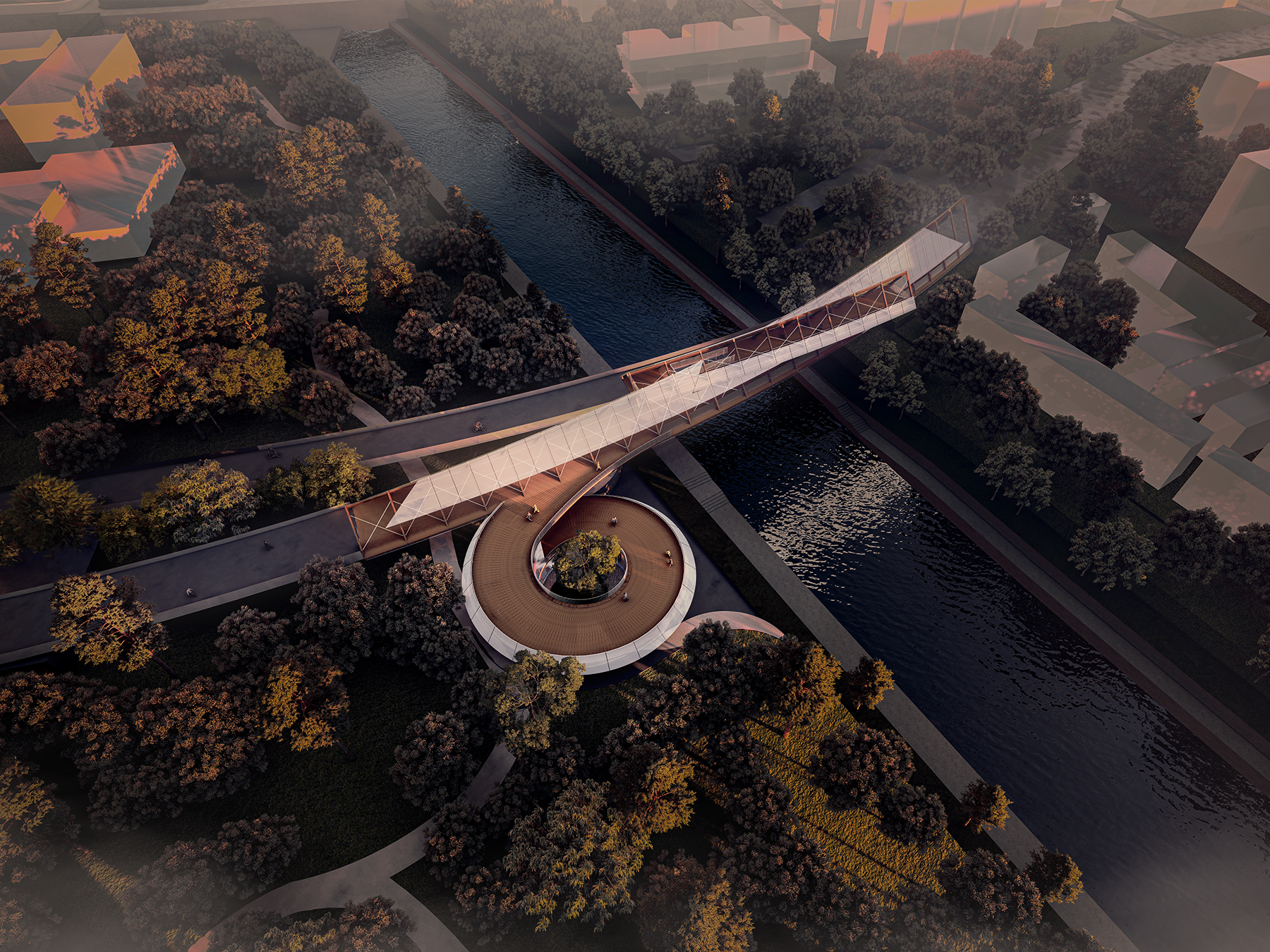 The Brief: As part of the renovation of the Sangganhe Botanical Garden in Rongcheng, the project required a new bridge to connect the two sides of the Sanggan River. Apart from the bridge acting as a transitional circulation space, the aim was to create a structure that would incorporate a park and support community gatherings.
The Constraint: The bridge design had to accommodate both pedestrian and bicycle circulation, without disrupting the botanical garden’s vegetation and views. In parallel, the structure needed to cover the span of the river using as few supports as possible in order to not to disturb the natural landscape.
The Design Move: The project transforms the bridge into a hybrid infrastructure that simultaneously shapes space. Separate lanes organize bicycle and pedestrian circulation, while a spiral path links the bridge to the café below and to a viewing platform above the river. Structurally, a wooden truss system stabilized with metal cables allows for a large span with minimal piers.
The Result: The project reframes a simple infrastructural requirement and turns it into an opportunity to expand the area’s public space. Consequently, a bridge that usually functions solely as a crossing becomes a connection as well as a horticultural destination.
The Perch
By Nicole Blair, Austin, Texas
Finalist, Residential Renovations and Additions, 12th Architizer A+Awards
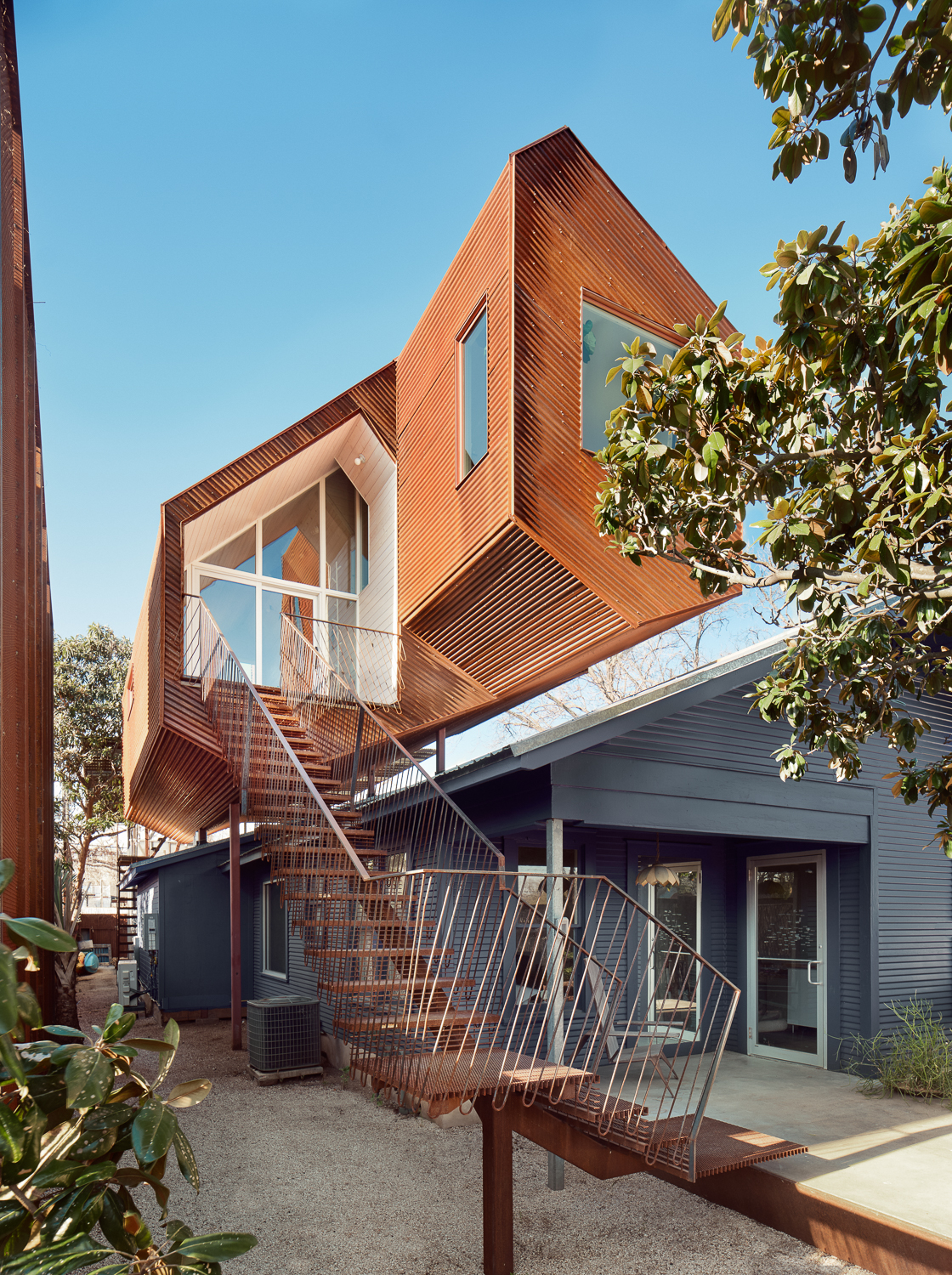
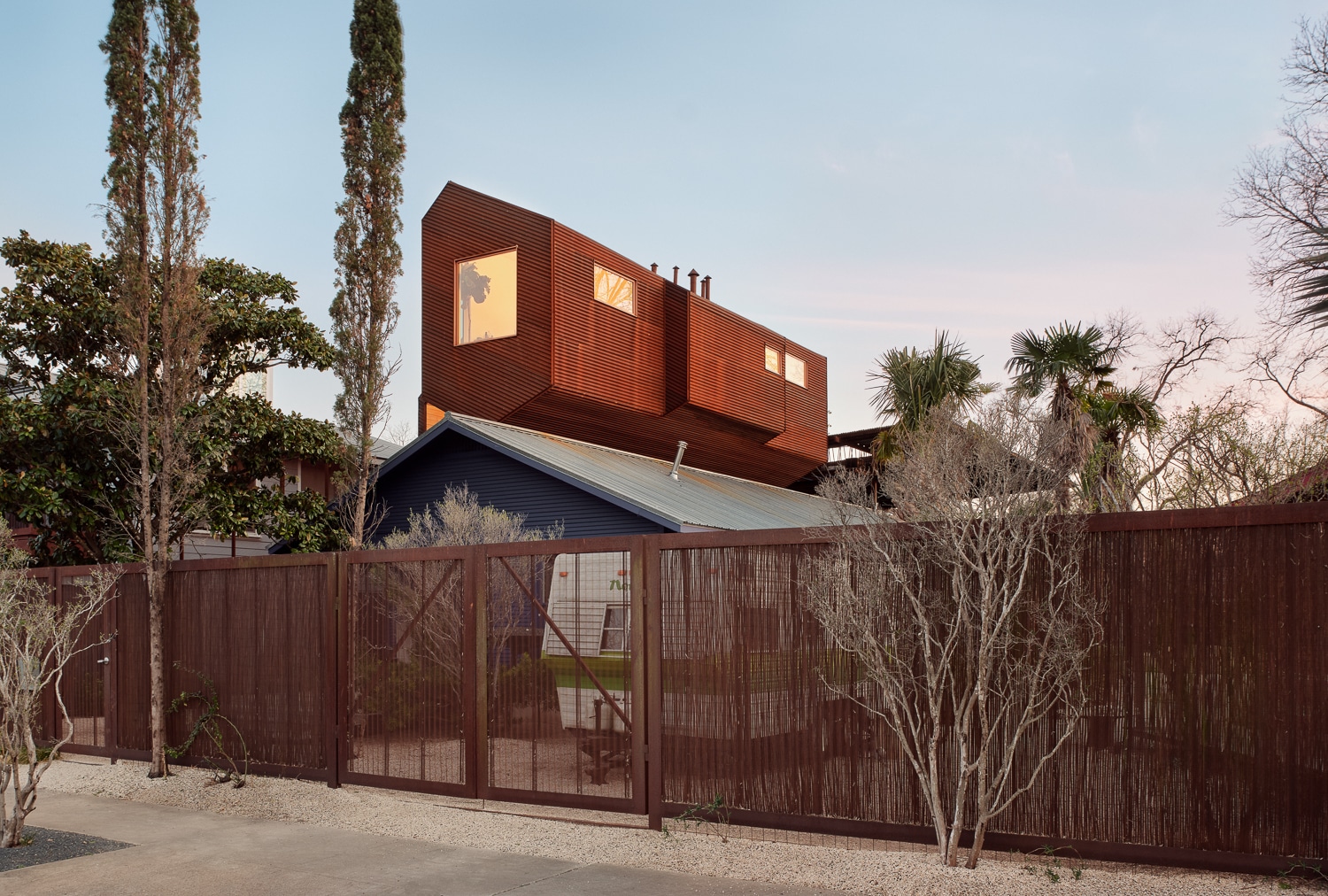
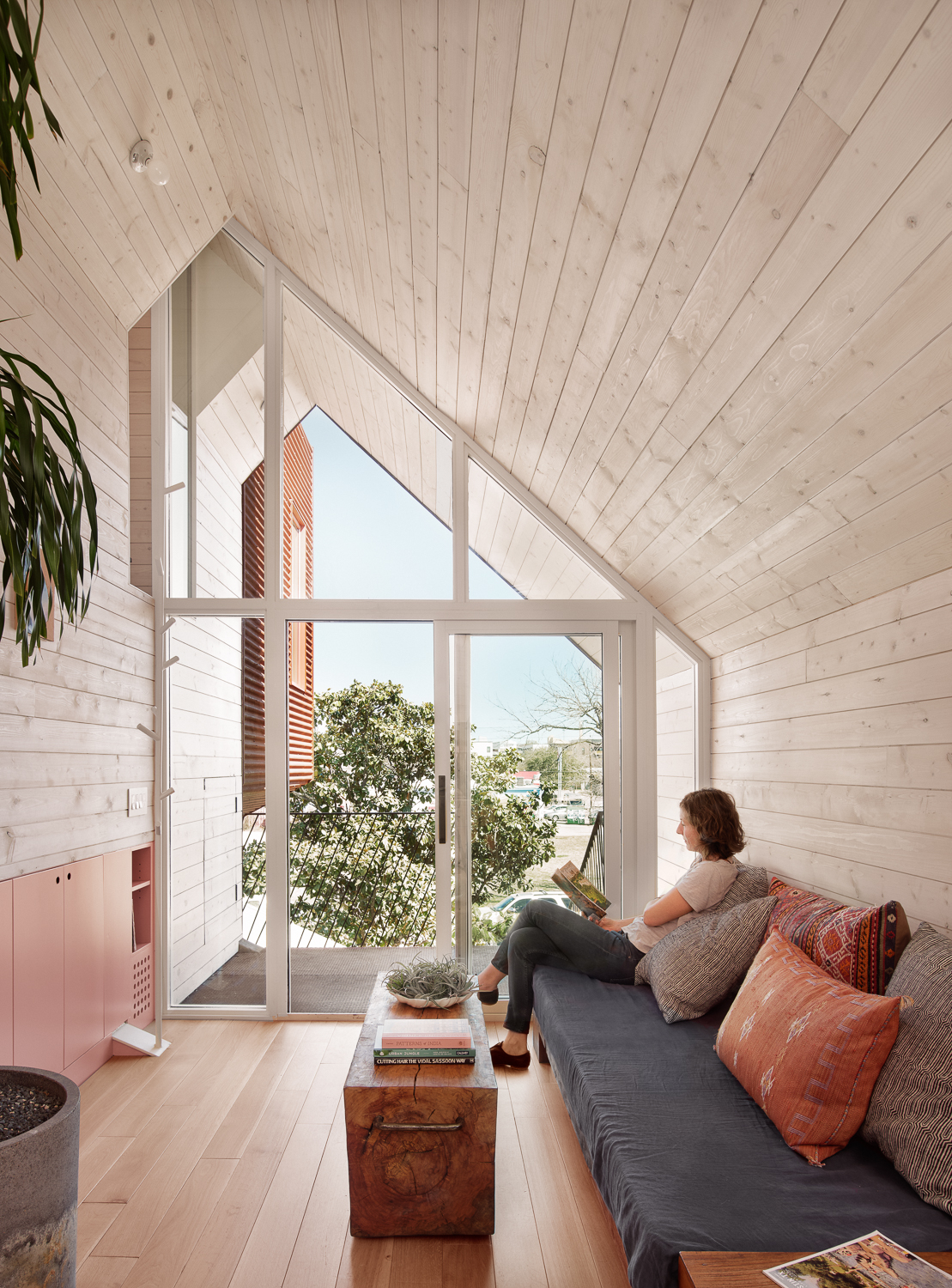 The Brief: The clients, a hairstylist and a landscape designer, needed a flexible studio space that could accommodate work, guests and occasional living. At the same time, they wanted to preserve their backyard landscape and avoid relocating during construction. Consequently, the design had to be a compact addition and minimal intervention that could expand the functionality of the existing bungalow.
The Constraint: The project had to overcome several issues such as preserving the mature backyard landscape, comply to local building regulations and limiting construction disruption. Furthermore, the addition had to be lightweight and occupy a small footprint while providing sufficient, flexible space for multiple uses.
The Design Move: A compact 660-square-foot (61 square meter) structure is designed above the existing bungalow. To preserve the surrounding vegetation, the addition rests on four steel columns – three of which pass through the bungalow walls to stabilize the structure – allowing the ground-level landscape to remain largely untouched. The plan follows a split-level organization combined with vaulted ceilings to create a sense of spatial generosity, while integrating ample amounts of storage. Finally, multiple building components were prefabricated off-site to minimize construction disturbance.
The Result: By concentrating the building footprint and lifting the program above the roofline, the project expands the home’s capacity without sacrificing the landscape that initially defined it.
Ce que les Architectes peuvent tirer de cet exercice
Across these briefs, a clear pattern emerges: strong projects often begin with a clearly articulated problem, and a successful design brief makes the logic of the architecture immediately legible. What happens, though, when architecture has no problems to solve? What about all the luxury villas or the iconic buildings, whose aim is primarily aesthetic dominance or imposing status? In these cases, the brief serves as justification rather than articulation, and this perhaps is why architectural language has drifted towards metaphor.
Not every project needs to solve a problem. However, the ones that are grounded in clear briefs and real constraints tend to produce the most substantive architecture. And the best part? AI tools may promote this kind of thinking by exposing the ideas that lack specificity. Because AI is remarkably good at repeating architectural clichés and remarkably bad at hiding them.